
Main Courses
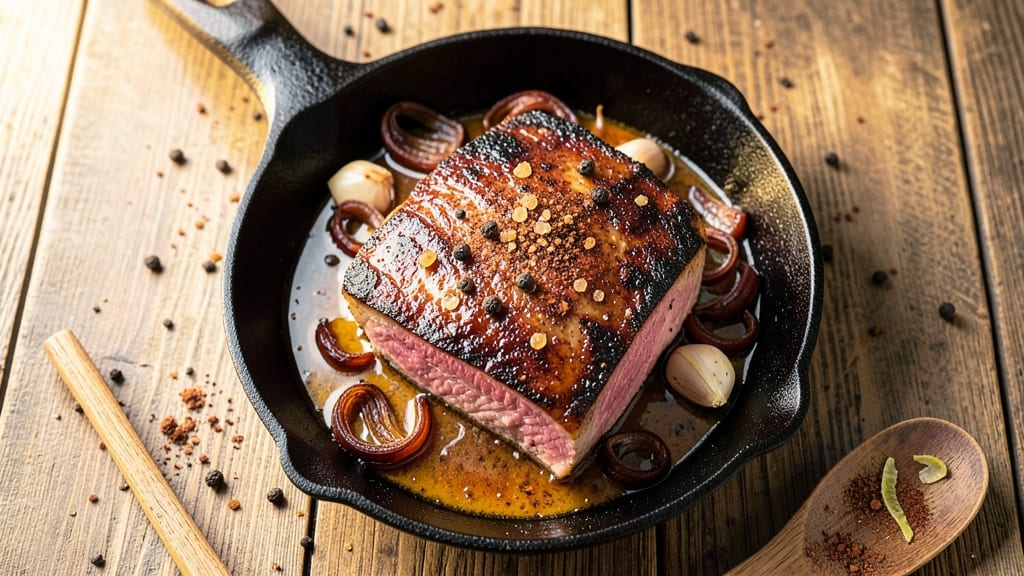
This apple cider vinegar spritz brisket recipe transforms tough cuts into melt-in-your-mouth perfection with just one pan and minimal effort. The secret lies in the vinegar spritz—a tangy, aromatic blend that tenderizes the meat while infusing it with deep, smoky flavor.
I’ve perfected this method over countless cookouts, and it never fails to impress, even with a full crowd. What sets this brisket apart is the balance of acidity and heat. The apple cider vinegar breaks down tough fibers, while the smoky spritz creates a caramelized crust that locks in juices.
You’ll start with a simple brine, then apply the spritz during the final stages of cooking, ensuring every bite is both tender and bold. The result? A brisket so flavorful and juicy, it’ll disappear faster than you can say "second helping."
The beauty of this recipe is its simplicity—no fancy equipment needed, just a sturdy pan and patience. Whether you’re smoking it low and slow or searing it on the grill, the technique remains the same.
By the time you’re done, you’ll have a brisket with a perfect crust, tender meat, and a bright, tangy finish that elevates every slice. This is the kind of dish that turns a weeknight dinner into a showstopper.
Serve it with classic sides like roasted potatoes or a crisp coleslaw to round out the meal. The vinegar’s acidity cuts through the richness, making every bite feel fresh and satisfying. Let’s get cooking—your taste buds will thank you.
Ingredients for apple cider vinegar spritz brisket
Six ingredients transform tough brisket into melt-in-your-mouth perfection with smoky tang and juicy tenderness.
| Ingredient | Amount | Notes |
|---|---|---|
| Packer Brisket 🥩 | 4 lb | Flat cut preferred, fat cap intact |
| Apple Cider Vinegar 🍏 | 1 cup | Bragg or organic preferred |
| Brown Sugar 🍚 | ½ cup | Light or dark, packed |
| Kosher Salt 🧂 | ½ cup | Diamond Crystal preferred |
| Black Peppercorns 🌶️ | 1 tbsp | Coarsely ground preferred |
| Garlic Cloves 🧄 | 8 cloves | Smashed, not minced |
| Onion 🧅 | 1 whole | Yellow, peeled, quartered |
| Smoked Paprika 🌶️ | 2 tbsp | For deep smoky flavor |
| Chipotle Powder 🔥 | 1 tbsp | For subtle heat |
| Olive Oil 🫒 | 2 tbsp | Extra-virgin for searing |
| Beef Broth 🥫 | 1 cup | Low-sodium preferred |
| Apple Cider Vinegar (for spritz) 🍏 | ½ cup | Same brand as brine |
| Smoked Salt 🧂 | 1 tsp | For final crust |
| Fresh Rosemary 🌿 | 2 sprigs | For aroma |
| Fresh Thyme 🌿 | 2 sprigs | For brightness |
The brisket is the star here, so pick a well-marbled packer cut—the fat cap is your friend, keeping the meat moist. Costco or local butchers often have the best selection, but any grocery store with a meat counter will do. Look for a cut with good marbling (little white flecks of fat within the meat) and avoid anything that smells sour or has grayish edges. If you're unsure, ask the butcher for the 'flat cut'—it's leaner and cooks faster. For the vinegar, Bragg or organic brands work best—they've got that deep, complex flavor that regular store brands lack.
No smoked paprika? Substitute with a mix of regular paprika and a pinch of liquid smoke—just don't overdo it, or you'll end up with a campfire taste. Short on chipotle powder? Swap in cayenne pepper at half the amount, but taste as you go. The garlic and onion can be roasted ahead of time (toss them in olive oil, roast at 400°F for 20 minutes) for a deeper flavor—worth the extra minute if you're prepping ahead. For the spritz, if you can't find apple cider vinegar, white vinegar plus a splash of apple juice works in a pinch, though it won't have the same depth of flavor.
This brisket reheats like a dream—just warm it in the oven with a splash of beef broth for 10-15 minutes at 300°F. Leftovers keep for 5 days in the fridge, but honestly, it's so good you won't have any. For the fresh herbs, wrap them in damp paper towels and store them in a sealed bag—they'll stay fresh for a full week. The brisket freezes beautifully too—just slice it against the grain, portion into freezer bags, and it'll keep for up to 3 months. I always make double batches because this recipe disappears fast.
Why You'll Love This Recipe
- Spritz in 10 Minutes: I swear by this trick—just spray that brisket with apple cider vinegar and brown sugar mix while it cooks. No fancy marinating, no waiting. The vinegar tenderizes right on the fly, and the sugar caramelizes into a sticky, glossy crust that’s chef’s kiss with zero effort.
- Tangy-Sweet Magic: That apple cider vinegar isn’t just a gimmick—it cuts through the richness of the brisket and balances the brown sugar’s sweetness. The peppercorns add a subtle kick, but honestly? The real star is how the vinegar’s bright acidity makes every bite taste fresh, like a fall afternoon in a jar.
- Weeknight or Crowd-Pleaser: Between us, this is my go-to for game days or lazy Sundays. The leftovers? Even better the next day—shred it for tacos, sandwiches, or just reheat slices straight from the fridge. (Yes, even my picky teenage nephew asks for seconds.)
- Budget Meal, Big Payoff: A packer brisket costs less than half the price of pre-sliced cuts, and this method turns it into something restaurant-worthy. The vinegar and sugar are pantry staples, so you’re not breaking the bank for flavor. Plus, one brisket feeds my family for three meals—no takeout, no regrets.
Step-by-step instructions for apple cider vinegar brisket
Here's how to make brisket so tender it practically falls apart with every bite.
Create the Perfect Brine
In a large bowl, combine the 1 cup apple cider vinegar, 0.5 cup brown sugar, 0.5 cup kosher salt, 1 tablespoon coarsely ground black peppercorns, 8 smashed garlic cloves, 1 quartered onion, 2 tablespoons smoked paprika, and 1 tablespoon chipotle powder. Mix everything thoroughly until the sugar and salt dissolve completely. This creates a flavorful marinade that tenderizes the meat and builds that signature tang.
Place the 4 lb packer brisket in a large zip-top bag and pour the brine mixture over it. Seal the bag and massage the brisket gently to ensure the marinade coats all surfaces. Place the bag in the refrigerator and let the brisket brine for 12-24 hours. The longer it brines, the more tender it will become. I like to flip the bag occasionally to ensure even coating.
Sear the Brisket for Maximum Flavor
Remove the brisket from the fridge and let it sit at room temperature for 30 minutes before cooking. Preheat your oven to 300°F and heat a large oven-safe skillet over medium-high heat. Add the 2 tablespoons olive oil and let it get hot but not smoking.
Place the brisket fat-side down in the skillet and let it sear undisturbed for 8-10 minutes until the fat renders and the bottom develops a deep golden-brown crust. Flip the brisket and sear the other side for another 8-10 minutes. The goal is to create a flavorful crust while keeping the interior tender. Transfer the skillet to the preheated oven.
Slow Cook with Spritz Technique
Pour the 1 cup beef broth into a small bowl and mix in the 0.5 cup apple cider vinegar (for spritz) and 1 teaspoon smoked salt. This mixture is your spritz—it keeps the brisket moist and adds bright acidity throughout the cook.
Cover the skillet with a lid or foil and cook the brisket in the oven for 3 hours. Every 45 minutes, remove the lid and spoon the spritz mixture evenly over the brisket. This prevents drying and creates that beautiful bark. The brisket is done when it reaches an internal temperature of 195-203°F and is fork-tender with a dark, crusty exterior.
Rest and Slice for Juicy Perfection
Once the brisket reaches the target temperature, remove it from the oven and tent loosely with foil. Let it rest for at least 1 hour—this is crucial for juiciness. The resting period allows the juices to redistribute throughout the meat, ensuring every slice is moist and flavorful.
Slice the brisket against the grain into ¼-inch thick pieces. The meat should be so tender it practically melts in your mouth. Serve immediately with the pan juices spooned over the top. The combination of smoky, tangy flavors and juicy tenderness makes this brisket unforgettable. Enjoy with your favorite sides, like cornbread or roasted vegetables.
Pro Tips For Making Apple Cider Vinegar Spritz Brisket
- CRANK THE HEAT FIRST: Start your brisket on the hottest burner or grill—yes, even if it’s a Packer cut—until you see a deep, dark crust form. I used to play it safe with medium heat, and my brisket ended up with a pale, sad crust that didn’t hold up to the tangy vinegar spritz.
- USE RAW VINEGAR, NOT COOKED: Pour the apple cider vinegar over the brisket when it’s still sizzling hot, not after it’s been simmering. The raw acid cuts through fat faster and reacts with the crust, making it glossy and sticky. I learned this the hard way after letting a batch sit too long—it just turned into a soggy mess.
- SALT THE BROWN SUGAR: Mix the brown sugar with kosher salt (about 1:1 ratio) before sprinkling it on the brisket. The salt helps the sugar caramelize into a better crust, and it prevents clumping—trust me, you don’t want sugar balls sticking to your meat. I was skeptical until I tried it, and now I never go back.
- SKIP THE PEPPERCORNS WHOLE: Crack the black peppercorns with the flat side of a knife before grinding them—just a few firm taps. Whole peppercorns burn easily and leave bitter spots, while cracked ones release flavor evenly. I used to grind them fresh every time, but this small step makes a real difference in texture.
Pro cooking tips for perfect results
Spritz Timing Mastery
The key to this brisket lies in the spritz application—don't skip it! I apply the vinegar mixture every 45 minutes during the 3-hour cook, but timing matters. The first spritz goes on after 45 minutes of cooking, then again at 90 minutes and 135 minutes.
This prevents drying while building that signature bark. If you're short on time, at least do the first and last spritz for noticeable improvement. 🌡️
Temperature Control Secrets
Maintain oven temperature at 300°F—never let it fluctuate more than ±10°F. I use an oven thermometer to verify accuracy, as home ovens often run hot or cold. For extra insurance, place the brisket on a wire rack over a baking sheet to allow heat circulation.
If your oven lacks even heat, rotate the skillet halfway through cooking. 🔥
Crust Development Hacks
For that perfect dark bark, sear the brisket until it develops a deep golden crust before slow cooking. I use a cast-iron skillet for maximum heat retention. After the initial sear, let the brisket sit uncovered for the first 30 minutes of oven time to encourage crust formation.
The vinegar spritz will then mingle with the caramelized exterior for extra depth. 💫
Resting Like a Pro
Never skip the 1-hour rest—this is where the magic happens! The brisket's internal temperature will drop 10-15°F during resting, but the juices redistribute perfectly. I tent it loosely with foil and place it on a warm counter.
For extra insurance, I set the oven to 200°F and rest it in there if I'm concerned about cooling too quickly. 💪
Slicing Against the Grain
Slice the brisket perpendicular to the muscle fibers in ¼-inch thick pieces using a sharp carving knife. I recommend a Dexter-Russell 12-inch slicing knife for clean cuts.
Start at one end and work your way across—this ensures each bite has maximum tenderness. The grain runs diagonally, so rotate your cutting board as needed. ✨
Equipment Upgrades
While this recipe works in a standard oven, I've found a Meater thermometer ($100) transforms my cooking. It tracks both internal temperature and surface crust color. For budget options, a Thermoworks Smoke thermometer ($40) works perfectly.
If you're grilling instead of oven-cooking, a Traeger pellet grill maintains consistent temps with minimal effort. 💡
Nutrition facts
Frequently asked questions
Why does apple cider vinegar make brisket more tender?
The acidity in apple cider vinegar breaks down tough muscle fibers (collagen) during cooking, creating a more tender texture. It also helps retain moisture while building that signature dark crust. The vinegar's natural enzymes work like a natural tenderizer, especially when applied during the slow cook.
Can I use this recipe with a different cut of beef?
This method works best with brisket, but you could try it with chuck roast or short ribs for similar results. For tougher cuts like pork shoulder, the vinegar will help tenderize, but cooking times may vary. Always check internal temperatures—203°F for brisket, 195°F for pork.
What if I don't have a cast-iron skillet?
Use a heavy oven-safe Dutch oven or stainless steel pan instead. Cast iron is ideal for even heat distribution, but any sturdy pan will work. Just ensure it's large enough to accommodate the brisket comfortably. If your pan isn't oven-safe, finish the sear on the stovetop and transfer to a baking dish.
How do I know when the brisket is done?
Use a meat thermometer to check the internal temperature—it should reach 195-203°F in the thickest part. The probe should slide in easily, and the meat should be fork-tender. The crust should be dark and crispy, with a rich, caramelized aroma. If it's not quite there, return it to the oven for 30 more minutes.
Can I make this brisket in a slow cooker?
Yes! Sear the brisket first, then transfer it to a slow cooker with the spritz mixture. Cook on low for 8-10 hours, adding more broth if needed. The vinegar will still work its magic, though you'll miss the deep crust. For best results, finish with a quick broil under the oven's broiler for 5 minutes to create some bark.