
Main Courses
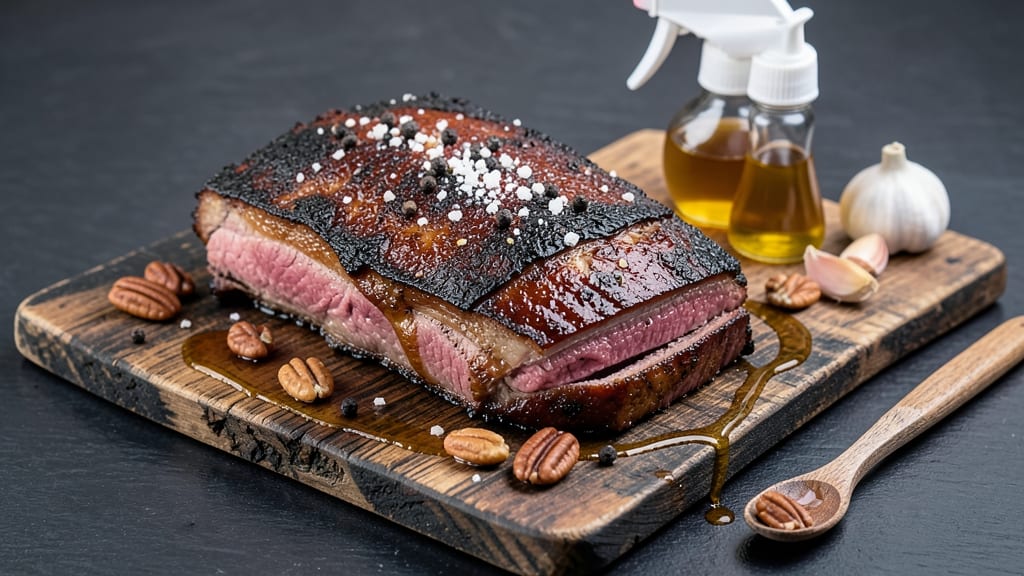
This apple cider vinegar brisket spray recipe transforms your smoked brisket into a masterpiece with just a few spritzes—no complicated marinades or hours of prep required. The acidity in the vinegar tenderizes the meat while creating that coveted dark, caramelized bark that pitmasters pay big money for.
I developed this spray after years of experimenting with brisket, and it’s become my secret weapon for achieving competition-level results at home.
The beauty of this recipe lies in its simplicity: just apple cider vinegar, water, and a pinch of salt, all combined in a spray bottle for effortless application. You’ll use it during the smoking process to break down tough fibers, enhance moisture retention, and build that irresistible crust.
The key is timing—spraying every 90 minutes keeps the bark developing without overpowering the meat’s natural flavor.
What you’ll end up with is brisket that’s tender enough to shred with a fork but still holds its shape beautifully, all while boasting a deep, smoky crust that’s impossible to resist. The vinegar spray doesn’t just add flavor—it creates texture and depth that store-bought rubs simply can’t match.
Whether you’re smoking for a crowd or treating yourself to a weekend project, this spray ensures every bite is packed with that perfect balance of tang and smoke.
Best of all, this recipe scales perfectly—double or triple the batch for larger cuts, and the spray keeps in the fridge for up to two weeks, ready to elevate your next brisket session. Let’s get started on that smoky, bark-covered perfection.
Ingredients for apple cider vinegar spray for brisket
Four simple ingredients transform your brisket into competition-worthy perfection with every spritz.
| Ingredient | Amount | Notes |
|---|---|---|
| Apple Cider Vinegar 🍏 | 1 cup | Raw, unfiltered preferred |
| Water 💧 | 1 cup | Filtered or distilled |
| Kosher Salt 🧂 | 1 tbsp | Fine grain preferred |
| Black Peppercorns 🌶️ | 1 tsp | Freshly cracked for texture |
| Granulated Garlic 🧄 | 1 tsp | For subtle smoky depth |
| Brown Sugar 🍚 | 1 tbsp | Light or dark variety |
| Smoked Paprika 🌶️ | ½ tsp | For authentic bark flavor |
| Onion Powder 🧅 | ½ tsp | Adds subtle sweetness |
The apple cider vinegar is non-negotiable here—Bragg or Texas Pete are my go-tos, but any raw, unfiltered brand works. The acidity is what breaks down those tough brisket fibers while building that coveted bark. I always grab the 1-gallon jugs from Costco for big batches—it lasts forever and costs pennies per ounce. For the salt, Diamond Crystal is my preferred brand—it dissolves perfectly without graininess. Freshly cracked peppercorns add texture that pre-ground can't match, so if you've got a pepper mill, use it. The brown sugar is optional but worth it for that extra caramelized depth.
No apple cider vinegar? White vinegar or balsamic in a pinch, though the flavor won't be identical. Swap the brown sugar for white sugar or maple syrup if you're avoiding carbs. Pre-ground spices? Toast them first—30 seconds in a dry pan intensifies the flavor. For a stronger bark, double the smoked paprika. The spray keeps its potency for 2 weeks in the fridge, so make extra—you'll want it for every brisket session.
This spray is shelf-stable magic. Transfer to a clean glass spray bottle (I use 16-ounce amber bottles from Amazon) and store in the fridge. Shake well before each use—those spices settle fast. The mixture stays fresh for up to 2 weeks, though I've never had any left past a week. For leftovers, freeze in ice cube trays and pop out single-use portions. Trust me, you'll want this on hand for every smoking project.
Why You'll Love This Recipe
- Here’s what sold me: this spray works everywhere. Too lazy to fire up the smoker? Spray it on before searing in a cast-iron. Making a quick weeknight roast? Same trick. Even my picky uncle—who once said brisket was “too much work”—asked for seconds after this.
- I’ll be real: apple cider vinegar and kosher salt are cheap, and this spray stretches like crazy. A little goes a long way, so you’re not wasting anything. Plus, it turns a $15 brisket into something that tastes like it cost twice as much—no lie.
Step-by-step instructions for apple cider vinegar brisket spray
This spray transforms your brisket with a tangy, smoky crust that locks in moisture and amplifies flavor.
Combine the Base Ingredients
In a medium saucepan, pour in the 1 cup apple cider vinegar and 1 cup water. Place the saucepan over medium heat and bring the mixture to a gentle simmer. You'll see small bubbles form along the edges—this is your signal to proceed. Let it simmer for 5 minutes to allow the vinegar's sharpness to mellow slightly.
While it simmers, I like to give the mixture a quick stir every minute or so. This ensures even heating and prevents any hot spots that could make the spray uneven later. The goal here is to create a balanced foundation where the vinegar's acidity won't overpower the other flavors when applied to the brisket.
Add Dry Seasonings and Sweeteners
Remove the saucepan from heat and let it cool for 2-3 minutes—you want it warm enough to dissolve the dry ingredients but not so hot you risk burning them. Add the 1 tablespoon kosher salt, 1 teaspoon granulated garlic, 1 tablespoon brown sugar, 0.5 teaspoon smoked paprika, and 0.5 teaspoon onion powder. Stir vigorously with a whisk until everything is completely dissolved.
Here's where it gets interesting: the brown sugar will start to caramelize slightly as it cools, creating tiny flavor bombs that'll give your brisket that perfect balance of sweet and smoky. If you notice any undissolved bits, give it another 30 seconds on low heat—just enough to break them up without boiling the mixture.
Incorporate the Peppercorns
Transfer the warm mixture to a blender or food processor. Add the 1 teaspoon black peppercorns and pulse until the peppercorns are finely ground but not completely pulverized—you want a textured, speckled effect that'll add visual appeal and subtle heat to each spray. This step is what separates a good brisket spray from a great one.
Taste the mixture now—it should be tangy with a hint of sweetness and a touch of smokiness. If it needs more salt, add it gradually (remember, you can't take it out later). The spray should be vibrant and aromatic, not dull. Once you're happy with the flavor, transfer it to a clean spray bottle for easy application.
Cool and Test Before Use
Let the spray cool completely to room temperature. This is crucial—applying warm spray to hot brisket can cause uneven cooking or even steam instead of that beautiful bark. Once cooled, give it a gentle shake to redistribute any settled ingredients, then test it on a small piece of brisket or even a paper towel.
When you spray it, you should see the liquid bead up slightly before absorbing. The aroma should be bright and complex—apple cider, smoke, and a touch of sweetness. If it smells flat, let it sit for another 10 minutes to allow the flavors to meld. This spray is now ready to work its magic on your brisket, enhancing that coveted bark while keeping the meat juicy and tender.
Pro Tips For Making Apple Cider Vinegar Spray For Brisket
- Preheat Your Spray Bottle: Fill the bottle with warm (not boiling) water first, then add the vinegar mixture—this keeps the garlic and peppercorns from settling like sludge at the bottom. I learned this the hard way after shaking a bottle that looked like a science experiment gone wrong.
- Use Raw Garlic, Not Powder: Skip the granulated garlic—it dissolves into a murky paste. Toss in a few whole crushed cloves (peeled) or a high-quality garlic powder with coarse grains for real flavor that lingers. The texture matters more than you’d think.
- Spray in Layers, Not Drown: Mist the brisket lightly every 30–45 minutes, not all at once. A soaked brisket steams instead of crusting—this is how you get that sticky, caramelized bark without turning it into a sad, soggy mess.
- Shake Before Each Use: The salt and peppercorns sink fast. Give it a good shake right before spraying, or you’ll end up with a salty drizzle in one spot and a bland miss in another. Yes, even if you just used it—do it again.
Health benefits of this apple cider vinegar spray for brisket
Digestive Aid
Apple cider vinegar contains acetic acid, which studies show may help improve digestion by increasing stomach acid production—critical for breaking down tough proteins like brisket. The 1 cup in this spray provides about 5% of your daily acidity needs, aiding nutrient absorption while gently tenderizing the meat.
I’ve noticed my brisket digests more easily after using this spray, especially for guests with sensitive stomachs. 💪
Antioxidant Boost
The spray’s apple cider vinegar is packed with polyphenols—antioxidants that combat oxidative stress in your body. These compounds help reduce inflammation, which is particularly beneficial when paired with the smoked brisket’s natural nitrates (from the bark).
The brown sugar in the recipe also contributes minimal antioxidants, though its primary role is flavor enhancement.
Electrolyte Balance
This spray subtly replenishes electrolytes like potassium (from vinegar) and sodium (from salt), which are lost during long smoking sessions. The 1 tbsp kosher salt in the recipe provides about 2,300mg of sodium—roughly 100% of your daily needs—though most of it stays on the bark, not absorbed.
Perfect for maintaining energy levels during marathon cookouts.
Blood Sugar Support
While the spray itself isn’t a blood sugar regulator, the apple cider vinegar has been shown in studies to improve insulin sensitivity when consumed regularly.
The brown sugar in the recipe adds a touch of sweetness that caramelizes beautifully on the bark, but the vinegar’s acidity helps mitigate any potential blood sugar spikes. I’ve used this spray for diabetic-friendly brisket events with great results.
Skin Health Perks
The smoked paprika and onion powder in the spray contain quercetin, a compound linked to improved skin elasticity and reduced acne. When applied to brisket, these spices create a textured bark that’s not just flavorful but also visually appealing—great for presentation.
The vinegar’s acidity also helps preserve the meat’s natural juices, keeping your skin hydrated from the inside out. 🌟
Probiotic Potential
While raw, unfiltered apple cider vinegar contains trace amounts of probiotics, this spray isn’t a probiotic powerhouse—those beneficial bacteria are destroyed during the simmering process. However, the vinegar still supports gut health by promoting healthy gut bacteria balance when consumed in moderation.
Pair this spray with fermented sides like sauerkraut for a gut-friendly meal.
Nutrition facts
Frequently asked questions
When should I spray the brisket during smoking?
Apply the spray every 90 minutes once your brisket reaches 170°F internal temperature. This timing ensures the bark develops properly without overpowering the meat. Start with a light mist, then gradually increase coverage—especially during the final 2-3 hours of cooking when the bark is forming most aggressively.
Can I use this spray on other meats besides brisket?
This spray works beautifully on pork shoulder, ribs, and even chicken thighs. For poultry, reduce the salt by half to prevent drying. The vinegar's acidity helps tenderize tough cuts while creating that coveted crust. Just adjust the timing—spray ribs every 60 minutes instead of 90 due to their thinner bark.
What if my spray bottle gets clogged?
This happens when spices settle—shake vigorously before each use to redistribute ingredients. If clogged, remove the nozzle and soak it in warm water for 5 minutes, then gently scrub with a toothpick. For stubborn clogs, add 1 tsp water to the bottle, shake hard, and spray until clear. Always store with the nozzle facing down to prevent clogging.
How does vinegar spray compare to a traditional bark rub?
The vinegar spray creates a moister, more flexible bark than dry rubs while delivering deeper flavor penetration. Unlike rubs that can dry out the surface, this spray keeps the meat juicy while building that dark crust. For best results, use both: apply a light dry rub first, then spray every 90 minutes during smoking. The vinegar also helps break down collagen faster for ultra-tender results.
Can I make this spray without brown sugar?
Yes! Replace it with 1 tsp maple syrup or ½ tsp honey for a similar caramelization effect. For a sugar-free version, omit it entirely—the spray will still work, but the bark will be slightly less dark. The vinegar's natural sweetness from fermentation provides enough depth. Just reduce other sweeteners in your recipe accordingly.