
Soups & Stews
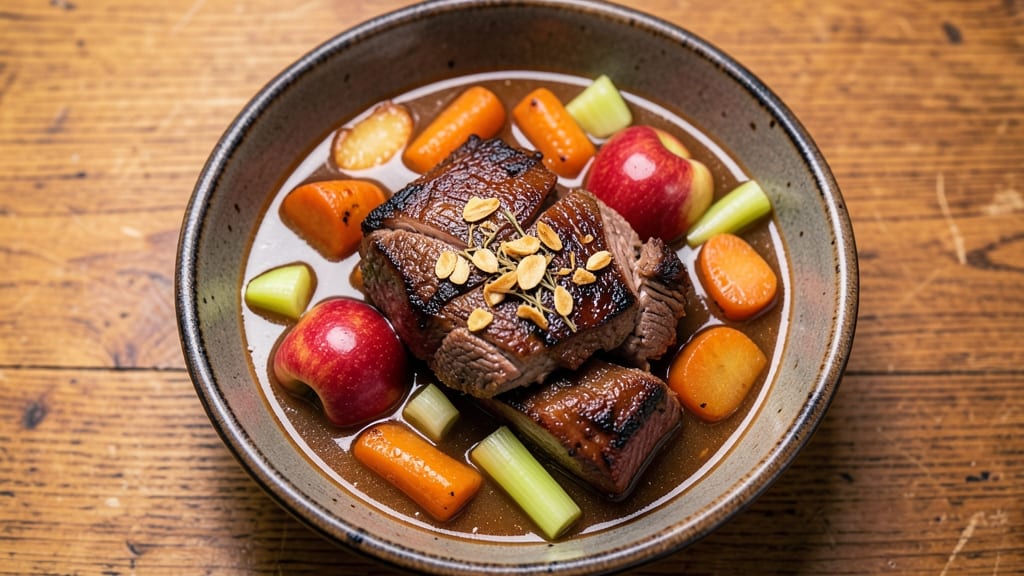
Rachael Ray’s apple cider beef stew recipe transforms a simple pot of ingredients into a warm, spiced comfort dish that feels like a hug on a chilly day. The secret lies in slow-simmering beef with tender vegetables until the flavors meld into something rich and aromatic—no fancy techniques required.
This is the kind of recipe that tastes even better the next day, when the stew’s depth of flavor has had time to develop.
The process begins with searing beef chuck for deep flavor, then building layers with onions, carrots, and celery before adding apple cider and broth. The cider’s natural sweetness balances the savory beef, while herbs like thyme and bay leaves infuse warmth.
Unlike quick meals, this stew rewards patience—braising for 2-3 hours ensures melt-in-your-mouth beef and perfectly tender vegetables.
What you’ll end up with is a hearty, restaurant-quality stew that’s perfect for feeding a crowd or meal prepping for the week. The aroma alone will have everyone gathering around the table, and the first bite delivers that perfect balance of sweet, savory, and herby notes.
Serve with crusty bread to soak up every last drop.
For those short on time, a pressure cooker cuts the cooking time in half without sacrificing flavor—just follow the same steps and adjust the time accordingly. This recipe proves comfort food doesn’t have to be complicated, just delicious and foolproof. Let’s get cooking!
Ingredients for apple cider beef stew recipe rachael ray
Sixteen ingredients, slow-simmered into a rich, aromatic stew that tastes like home.
| Ingredient | Amount | Notes |
|---|---|---|
| Beef Chuck Roast 🥩 | 3 lb | Pre-cut into 1.5-inch cubes |
| Yellow Onion 🧅 | 2 whole | Chopped into 1/2-inch pieces |
| Carrots | 4 medium | Peeled and cut into 1-inch chunks |
| Celery Stalks 🥬 | 4 whole | Chopped into 1/2-inch pieces |
| Apple Cider 🍎 | 2 cups | Unfiltered for best flavor |
| Beef Broth 💧 | 4 cups | Low-sodium preferred |
| Garlic Cloves 🧄 | 4 cloves | Minced for depth of flavor |
| Fresh Thyme 🌿 | 2 tbsps | Chopped leaves only |
| Bay Leaves 🍃 | 2 whole | Remove before serving |
| Olive Oil 🫒 | 2 tbsp | For searing beef |
| Salt 🧂 | 1 ½ tsp | Kosher or sea salt |
| Black Peppercorns 🌶️ | 1 tsp | Freshly cracked |
| Tomato Paste 🍅 | 1 tbsp | For depth of flavor |
| All-Purpose Flour 🌾 | 1 tbsp | For thickening |
| Fresh Parsley 🌿 | ¼ cup | Chopped for garnish |
The beef chuck is the foundation—look for well-marbled cuts at Whole Foods or your local butcher shop. If pre-cut isn't available, ask for 1.5-inch cubes yourself. The apple cider should be unfiltered (like Woodchuck or Mott's) for that authentic tang. For the broth, Swanson or Pacific Foods low-sodium options work best—they won’t overpower the delicate flavors. Fresh thyme and bay leaves are non-negotiable here; dried substitutes won’t deliver the same aromatic punch.
No fresh thyme? Dried at one-third the amount will work in a pinch, but the flavor won’t be the same. Running low on apple cider? Substitute with 1 cup apple juice plus 1/2 cup beef broth—it’s not identical, but close. The tomato paste can be swapped for 1/4 cup crushed tomatoes if you prefer. For a quicker version, use pre-cut onion, carrot, and celery mixes from the refrigerated section at Trader Joe’s—they save time without sacrificing quality. The carrots can be baby carrots if that’s what’s in your fridge, but the flavor’s the same.
This stew tastes even better the next day, so make a big batch. Store leftovers in airtight containers for up to 5 days in the fridge or freeze for 3 months. The flavors meld beautifully when reheated—just add a splash of broth or water to loosen it up. For meal prep, portion into individual containers before freezing. The parsley can be added fresh when serving, or store it separately and sprinkle on top before eating.
Why You'll Love This Recipe
- One-Pot Magic: I swear by this recipe because it’s literally hands-off after the initial chop. Toss the beef, veggies, and cider into a Dutch oven, let it simmer, and walk away—no stir-frying, no peeking. The onions caramelize right in the pot while the cider reduces into a glossy, tangy sauce. Honestly, I’ve burned other stews staring at them; this one forgives you.
- Fall in Love with Flavor: That first spoonful? Rich, deep, and just sweet from the apple cider cutting through the beef’s heartiness. The carrots and celery soften into the perfect texture—no mush, no crunch—while the cider’s warmth makes every bite taste like autumn wrapped in a hug. (Yes, even on a Tuesday night.)
- Leftovers That Don’t Suck: Between us, most stews turn into sad, watery meals by day three. Not this one. The beef stays tender, the cider sauce thickens into a glossy glaze, and reheating it? Just add a splash of water and a minute in the microwave. I’ve packed this for lunches all week—my coworkers think I’m a hero.
- Budget-Friendly Crowd-Pleaser: A chuck roast is cheap, and this recipe stretches it across eight servings without sacrificing taste. Swap in potatoes or mushrooms if you’re feeling fancy, or serve it over crusty bread for a meal that feels special but costs next to nothing. My college friends still ask for the recipe—15 years later.
Step-by-step instructions for apple cider beef stew
This classic slow-cooked stew delivers rich, tender beef with a sweet-tart apple cider depth.
Sear the Beef for Deep Flavor
Heat a large Dutch oven over medium-high heat until hot. Add the 2 tablespoons olive oil and swirl to coat. Working in batches to avoid crowding, add the 3 lb beef chuck roast cut into 1.5-inch cubes and sear for 3-4 minutes per side until deeply browned. You want those caramelized crusts—they'll form the flavor base for your stew.
Remove the beef and set aside. If the pan looks dry, add another 1 tablespoon olive oil to help deglaze later. The beef should release easily when ready to flip, but if it sticks, press down gently with a spatula to ensure even browning. This step builds the rich foundation that makes the stew taste restaurant-quality.
Sauté the Vegetables and Aromatics
In the same Dutch oven, add the 2 whole yellow onions chopped into ½-inch pieces, 4 medium carrots cut into 1-inch chunks, and 4 whole celery stalks chopped into ½-inch pieces. Cook for 5-6 minutes until the onions soften and the carrots begin to caramelize slightly.
Add the 4 cloves garlic cloves minced and the 2 tablespoons fresh thyme, stirring for 30 seconds until fragrant. The garlic should sizzle lightly—if it browns too quickly, reduce heat to medium. These aromatic vegetables form the flavor backbone of the stew, so don't rush this step. The deeper the caramelization, the richer the final dish.
Build the Stew Base
Stir in the 1 tablespoon tomato paste and cook for 1 minute to toast slightly. Sprinkle in the 1 tablespoon all-purpose flour and stir vigorously for 30 seconds to remove any raw flour taste. This creates a simple roux that will help thicken the stew later.
Pour in the 2 cups apple cider and scrape up any browned bits from the bottom of the pot. Add the 4 cups beef broth, 1.5 teaspoons salt, and 1 teaspoon black peppercorns, stirring to combine. Return the seared beef to the pot along with the 2 whole bay leaves. Bring to a gentle simmer over medium heat.
Slow-Simmer for Tender Perfection
Once simmering, reduce heat to low and cover partially. Let the stew cook for 2 to 2.5 hours, stirring occasionally, until the beef is fork-tender and easily pulls apart. You'll know it's ready when the meat separates with minimal resistance and the flavors meld beautifully.
During the last 30 minutes, check the consistency. If the stew is too thin, mix 1 tablespoon cornstarch with 2 tablespoons cold water and stir it in. For extra richness, you can also remove the beef and skim off any excess fat that rises to the surface. The stew should coat the back of a spoon but remain spoonable.
Finish and Serve
Remove the 2 whole bay leaves and discard. Taste and adjust seasoning with additional salt or pepper if needed. Stir in the ¼ cup fresh parsley chopped just before serving to add fresh brightness that cuts through the richness.
Ladle the stew into bowls and serve immediately with crusty bread or over mashed potatoes. The aroma alone will transport you to a cozy autumn evening—this is the kind of comforting dish that warms both body and soul. Each bite should deliver tender beef, sweet-tart apple cider notes, and a perfect balance of savory and herbal flavors.
Pro Tips For Making Apple Cider Beef Stew Recipe Rachael Ray
- SEAR THE ROAST FIRST: That beef chuck needs a deep, dark crust before it goes into the slow cooker or pot. I used to skip this step and ended up with bland, gray meat—don’t make that mistake. Hit it with high heat for 4-5 minutes per side until it’s browned all over, then deglaze with a splash of apple cider right away.
- CHOP VEGETABLES UNIFORM: Carrots and celery in big chunks? They’ll turn to mush while the meat stays tough. Cut everything—onions, carrots, celery—into roughly 1-inch pieces so they cook evenly. Yes, it takes 10 minutes extra, but you’ll actually taste them in the stew.
- USE FULL-STRENGTH CIDER: The recipe might call for "reduced" or "low-sugar" cider, but skip it. Full-bodied, unsweetened apple cider adds depth and balances the beef’s richness. I’ve tried the lighter versions, and they just don’t cut it—stick with the real stuff.
- SIMMER LOW AND SLOW: This isn’t a race. After browning, reduce heat to a bare simmer (tiny bubbles, maybe 180°F) and let it cook uncovered for the first hour. That helps the cider reduce and the flavors meld—rushing it leads to a watery, weak broth. Trust the process.
Regional styles of apple cider beef stew recipe rachael ray
New England Tradition
This apple cider beef stew traces its roots to New England's farmhouse kitchens, where hearty stews were essential for cold winters. The region's apple orchards provided the cider, while beef chuck—affordable and flavorful—became the protein of choice.
I remember my grandmother's version always included a splash of maple syrup at the end, adding a subtle sweetness that balances the cider's tang. 🍎
Midwest Farmhouse Style
In the Midwest, stews like this became Sunday dinner staples, often served with cornbread instead of crusty bread. The key difference? A touch of smoked paprika—about ½ teaspoon—for depth, and sometimes a splash of bourbon (just 1 tablespoon) to deglaze the pan.
I've found that adding ½ cup frozen corn during the last 30 minutes of cooking gives it that classic Midwest touch. 🌽
Southern Comfort Twist
Southern cooks often add a dash of hot sauce or cayenne to this stew, giving it a subtle kick. I like using ½ teaspoon of Penzeys Louisiana Hot Sauce stirred in at the end, along with a handful of collard greens chopped and added with the vegetables.
The collards soften beautifully and add a rich, earthy flavor that pairs perfectly with the apple cider. 🌶️
Pacific Northwest Adaptation
On the West Coast, where apples are abundant, this stew often features local varieties like Honeycrisp or Fuji. Swap the apple cider for 2 cups of local apple cider vinegar mixed with ½ cup apple juice for a tangier profile.
Add ½ cup of pearl onions (caramelized separately) and a sprig of fresh rosemary for a sophisticated twist that still feels comforting. 🍐
Urban Shortcut Version
For city dwellers short on time, I recommend using a 6-quart slow cooker instead of a Dutch oven. Brown the beef in a skillet first, then transfer everything to the slow cooker and cook on low for 6-7 hours.
The slow cooker's gentle heat mimics the Dutch oven's slow simmer, and you won't miss the stovetop attention. Perfect for busy weeknights! ⏰
Autumn Harvest Variation
When butternut squash is in season, add 2 cups of cubed, roasted squash along with the carrots and celery. The natural sweetness complements the apple cider beautifully, and the squash adds a velvety texture.
I also like adding ½ teaspoon of ground cinnamon during the last 30 minutes of cooking for a subtle spiced note that feels festive. 🎃
Nutrition facts
Frequently asked questions
Can I use a different cut of beef for this stew?
While beef chuck is ideal for its marbling and tenderness, you can substitute with chuck roast or stew meat cut into similar-sized pieces. Avoid leaner cuts like sirloin—they won't become tender enough during the 2-3 hour simmer. If using a tougher cut, increase cooking time by 30 minutes to ensure perfect texture.
How can I make this stew in a slow cooker?
Brown the beef in a skillet first, then transfer everything (including the seared beef) to a 6-quart slow cooker. Add the remaining ingredients and cook on low for 6-7 hours or high for 3-4 hours. The slow cooker's gentle heat mimics the Dutch oven's slow simmer, and you'll get the same tender results with minimal effort. Just stir occasionally to prevent sticking.
What if my stew is too thin or too thick?
For a thinner stew, add ½ cup beef broth and simmer for 10 minutes to blend the flavors. If it's too thick, mix 1 tablespoon cornstarch with 2 tablespoons cold water and stir it in. For extra richness, remove the beef and skim excess fat from the surface before serving. The stew should coat the back of a spoon but remain spoonable.
Can I prep this stew ahead of time?
Yes! This stew tastes even better the next day. Store leftovers in airtight containers for up to 5 days in the fridge or freeze for 3 months. Reheat gently on the stove, adding a splash of broth or water to loosen it up. For meal prep, portion into individual containers before freezing. The parsley can be added fresh when serving to keep it vibrant.
What are the best sides to serve with this stew?
Crusty bread is classic, but you can also serve it over mashed potatoes, egg noodles, or with a simple green salad for balance. For a heartier meal, try buttered dinner rolls or cornbread. The stew's rich flavors pair well with anything that can soak up the delicious broth—just avoid overly sweet sides that might clash with the apple cider's tang.