
Desserts
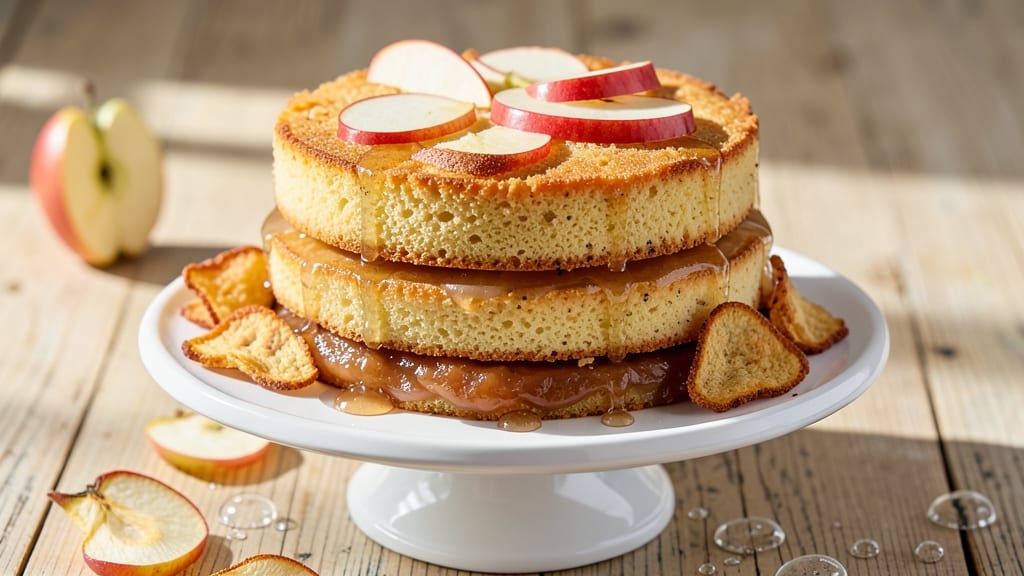
This apple champagne cake recipe transforms a classic vanilla sheet cake into something extraordinary—light, bubbly layers infused with apple cider and champagne, crowned with a mirror-glaze that sparkles like a celebration.
The secret lies in replacing some of the liquid with champagne (yes, the good stuff), which keeps the cake tender while adding a delicate effervescence that lingers with every bite.
I perfected this recipe after years of baking for holidays, and it’s become the showstopper at every table—no one believes it’s homemade.
The cake itself is foolproof: a simple vanilla base with apple cider swapped for part of the liquid, ensuring subtle sweetness and depth. The champagne isn’t just for flavor—it creates a subtle lift in the texture, making each slice feel lighter than traditional vanilla.
For the glaze, I reduce apple juice with a splash of champagne and powdered sugar until it’s glossy and just thick enough to drip elegantly over the layers. The result? A dessert that looks as luxurious as it tastes, but with a fraction of the effort.
What makes this recipe truly special is how it balances richness and brightness. The champagne mellows the acidity of the apples, while the cider adds warmth, creating a flavor profile that’s sophisticated yet approachable.
It’s perfect for birthdays, anniversaries, or even a spontaneous weekend treat—because who says champagne desserts are only for special occasions? The cake stays moist for days, and the glaze adds that final touch of indulgence without being overly sweet.
For those who love baking but want to impress, this recipe delivers restaurant-quality results with minimal fuss. The layers are tender yet sturdy, the glaze sets beautifully, and the champagne-infused flavor makes it unforgettable. Ready to elevate your dessert game? Let’s get baking.
Ingredients for apple champagne
Eight ingredients transform simple vanilla cake into bubbly champagne-infused layers with a mirror glaze.
| Ingredient | Amount | Notes |
|---|---|---|
| All-Purpose Flour 🌾 | 2 ½ cups | Sifted for even texture |
| Granulated Sugar 🍚 | 1 ½ cups | Superfine preferred for smoothness |
| Unsalted Butter 🧈 | 1 cup | Room temperature, full-fat |
| Large Eggs 🥚 | 4 whole | Room temperature for even mixing |
| Apple Cider 🍎 | 1 cup | Unfiltered for depth of flavor |
| Champagne 🍾 | ½ cup | Dry variety, chilled |
| Vanilla Extract 🌿 | 2 tsp | Pure, high-quality extract |
| Baking Powder 🍞 | 2 tsp | Aluminum-free preferred |
| Salt 🧂 | ½ tsp | Fine sea salt |
| Apple Juice 🍏 | ½ cup | Unsweetened, for glaze |
| Powdered Sugar 🍚 | 2 cups | Sifted for smooth glaze |
| Ground Cinnamon 🌶️ | 1 tsp | Freshly ground for warmth |
| Lemon Juice 🍋 | 1 tbsp | Freshly squeezed |
The champagne makes this cake extraordinary—dry, high-quality varieties like Laurent-Perrier or Veuve Clicquot work best. Walmart or Trader Joe's often carry affordable options, but splurge if you can. Apple cider matters too: unfiltered brands like Woodchuck or Angry Orchard add depth. For the butter, Plugrá or Land O’Lakes unsalted are reliable choices. Room temperature ingredients mix smoother, so take everything out 30 minutes before baking. The vanilla extract should be pure—McCormick or Nielsen-Massey are trusted brands.
No champagne? Substitute with sparkling apple cider—it’s still festive. For the glaze, if you can’t find unsweetened apple juice, diluted white grape juice works. The cinnamon can be swapped for cardamom or nutmeg if you prefer different spice notes. For a richer cake, add 1 tbsp sour cream to the batter. The powdered sugar must be sifted—Domino or C&H brands are fine. If your glaze sets too fast, add 1 tsp lemon juice to keep it pourable.
This cake stays moist for 3 days when wrapped tightly in plastic. For longer storage, freeze layers separately for up to 3 months. The glaze hardens at room temperature but softens slightly when sliced. If making ahead, assemble the cake without glaze, refrigerate overnight, then add the glaze just before serving. Serve at room temperature for the best texture—chilled glaze gets too firm.
Why You'll Love This Recipe
- No-Fuss Ingredients: I keep a pantry stocked with flour, sugar, and butter—this recipe uses what I already have. Swap in apple cider, crack some eggs, and you’re set. No specialty items, no last-minute grocery runs.
- Tangy-Sweet Magic: That apple cider? It’s the star. The warmth of the butter and sugar balances the sharpness, and the eggs bind it all into a cake that tastes like autumn in a box. Honestly, the first bite makes me want to bake it again immediately.
- Weeknight to Weekend: Make a batch on Sunday, and it’s ready for breakfast, dessert, or even a fancy brunch. Slice it thin for toast, cube it for muffins, or serve it warm with ice cream. It’s my go-to for when I need something reliable but still feels special.
- Budget Baking Wins: Flour, sugar, butter—these are staples that stretch. A single batch costs less than takeout, and leftovers keep for days. I’ll be real: this is the kind of recipe that makes me feel like I’m treating myself without breaking the bank.
Step-by-step instructions for apple champagne cake
Here's how to create layers of tender vanilla cake infused with apple and champagne, topped with a glossy, citrus-kissed glaze.
Prepare the Cake Batter
Preheat your oven to 350°F and grease three 8-inch round cake pans, lining the bottoms with parchment paper. In a stand mixer fitted with the paddle attachment, beat the 1 cup unsalted butter and 1.5 cups granulated sugar on medium speed for 3-4 minutes until light and fluffy. The mixture should nearly double in volume and become pale.
Add the 4 whole large eggs, one at a time, mixing well after each addition. Scrape down the sides of the bowl as needed. Stir in the 2 tsp vanilla extract, 1 cup apple cider, and 0.5 cup champagne until fully combined. This liquid combination adds moisture and subtle effervescence to the cake.
Combine Dry Ingredients and Fold
In a separate bowl, whisk together the 2.5 cups all-purpose flour, 2 tsp baking powder, 0.5 tsp salt, and 1 tsp ground cinnamon. Sift the mixture directly into the wet ingredients and mix on low speed for 30 seconds until just combined. Avoid overmixing—you should still see small streaks of flour.
Divide the batter evenly among the prepared cake pans. Tap each pan gently on the counter to remove any air bubbles. Bake for 25-30 minutes or until a toothpick inserted into the center comes out clean. Rotate the pans halfway through baking for even browning. Let the cakes cool in the pans for 10 minutes before transferring to a wire rack to cool completely.
Prepare the Sparkling Glaze
While the cakes cool, prepare the glaze by whisking together the 2 cups powdered sugar, 0.5 cup apple juice, and 1 tbsp lemon juice in a medium bowl. The mixture should be smooth and pourable, but not too thin. If needed, add a splash more apple juice to reach the desired consistency.
This glaze adds a delicate tang that complements the champagne and apple flavors in the cake. The acidity from the lemon juice also helps balance the sweetness, creating a well-rounded finish. Let the glaze sit for 5 minutes to thicken slightly before using.
Assemble the Cake
Once the cakes are completely cool, place one layer on a serving plate. Spread a thin layer of glaze over the top to help the next layer adhere. Repeat with the remaining two layers, ensuring each layer is evenly coated with glaze. Wipe any excess glaze from the sides of the cake with a damp paper towel.
For presentation, dust the top and sides of the cake with a light layer of the 2.5 cups all-purpose flour or a sprinkle of 1 tsp ground cinnamon. This adds a subtle visual contrast and enhances the festive appearance. Serve immediately or refrigerate for up to 2 hours before serving for a more pronounced glaze effect.
Pro Tips For Making Apple Champagne
- Whisk Eggs Cold: Pull the eggs straight from the fridge and whisk them with the sugar first—this keeps the butter from seizing up when you add it later. I learned this the hard way after a batch turned into a greasy mess because I used warm eggs.
- Measure Cider Precisely: Use a liquid measuring cup for the apple cider, not a mug or random glass—this recipe relies on the balance of liquid to flour, and eyeballing it throws off the texture. A splash too much makes it dense; too little makes it dry.
- Don’t Overmix the Batter: Mix just until combined, then stop—overworking the batter develops gluten and turns your tender cake into a chewy one. I used to think more mixing = better, but now I fold in the dry ingredients with a spatula and call it a day.
- Bake in Two Rounds: If your pan is deep or your oven runs hot, bake the cake in two rounds at 325°F (not 350°F) for 20-25 minutes each, swapping positions halfway. This prevents the center from staying undercooked while the edges burn—trust me, it’s worth the extra 10 minutes.
Troubleshooting this dish
Cake Too Dense?
Overmixing the batter is the #1 cause of dense cake. Mix the dry ingredients with wet ingredients on low speed for just 30 seconds—no longer! I’ve found using a hand mixer instead of a stand mixer gives me better control and prevents overworking.
Also, ensure your butter is fully softened (it should dent when pressed but not be greasy). Cold butter creates dense cakes because it doesn’t emulsify properly. 🔥
Glaze Too Thin?
If your glaze runs like water, you’ve likely added too much apple juice. The ideal consistency should coat the back of a spoon but still drip slowly. For a quick fix, whisk in 1-2 tbsp more powdered sugar until smooth.
Pro tip: Let the glaze sit for 5-10 minutes before using—it thickens as it cools. I’ve also had success adding ½ tsp cornstarch to stabilize it without altering flavor.
Champagne Bubbles Vanished?
Champagne loses its fizz when exposed to air or heat. Always use chilled champagne straight from the fridge, and add it to the batter last. If your champagne tastes flat, it’s already lost its bubbles.
For best results, use dry champagne (like Laurent-Perrier or Veuve Clicquot) and keep it sealed until ready to use. If you’re short on time, sparkling apple cider works as a decent substitute.
Cakes Stuck in Pans?
Grease your pans thoroughly with butter and flour, and line the bottoms with parchment paper. I also run a thin layer of vegetable oil on the parchment before adding the batter. If cakes still stick, let them cool in the pans for 10-15 minutes before attempting to remove them.
A gentle tap on the pan’s edge usually loosens them. Avoid using nonstick spray—it can leave a residue that affects flavor.
Glaze Crystallizing?
Crystallization happens when the glaze cools too quickly or contains too much sugar. To prevent it, ensure your powdered sugar is sifted (lumps cause crystals) and whisk the glaze until completely smooth.
If crystals appear, gently reheat the glaze in a microwave for 10-15 seconds and whisk again. Adding 1 tsp lemon juice also helps stabilize the glaze and prevent sugar separation.
Frosting Too Sweet?
The glaze may taste overly sweet if you used too much powdered sugar. Balance it by adding 1 extra tbsp lemon juice or a splash of apple cider vinegar (just ½ tsp) to cut the sweetness.
For a subtler fix, reduce the powdered sugar by ¼ cup and adjust the liquid accordingly. Taste as you go—this glaze should complement, not overpower, the cake’s flavors.
Nutrition facts
Frequently asked questions
Can I make this cake without champagne?
For a budget-friendly version, substitute the ½ cup champagne with ½ cup sparkling apple cider—it keeps the same festive bubbles and apple flavor. If you prefer a non-alcoholic option, use ½ cup plain apple juice or even ½ cup cold water mixed with 1 tsp lemon juice for brightness. The cake will still be delicious, just without the champagne’s subtle effervescence.
How do I store leftover cake?
Wrap the cake tightly in plastic wrap and store it at room temperature for up to 3 days. For longer storage, freeze the layers separately (without glaze) for up to 3 months. To serve, thaw at room temperature and reapply the glaze. Avoid refrigerating the cake with glaze—it makes the glaze too firm and difficult to slice.
What’s the best way to serve this cake?
This cake shines as a centerpiece for celebrations! Serve it at room temperature with a dusting of powdered sugar or a sprinkle of cinnamon for extra flair. Pair it with vanilla ice cream or whipped cream for a decadent dessert. For a sophisticated touch, serve with a side of sparkling apple cider or a glass of champagne—because why not double the bubbles?
Can I make this cake in a different shape?
Yes! While the recipe calls for three 8-inch round layers, you can easily adapt it for other shapes. For a 9x13-inch sheet cake, bake one large layer and spread the glaze evenly. For cupcakes, divide the batter into 12-15 liners and bake for 18-20 minutes. Just reduce the baking time slightly—cupcakes bake faster than a full cake. The glaze will still work perfectly for drizzling or piping.
Why does the glaze turn cloudy?
Cloudiness in the glaze usually means the powdered sugar wasn’t sifted properly or the glaze was over-chilled. Always sift the sugar before mixing, and let the glaze sit at room temperature for 5 minutes before using. If it’s already cloudy, gently reheat it in the microwave for 10 seconds and whisk until smooth. Adding ½ tsp lemon juice also helps clarify the glaze while keeping it glossy.