
Desserts
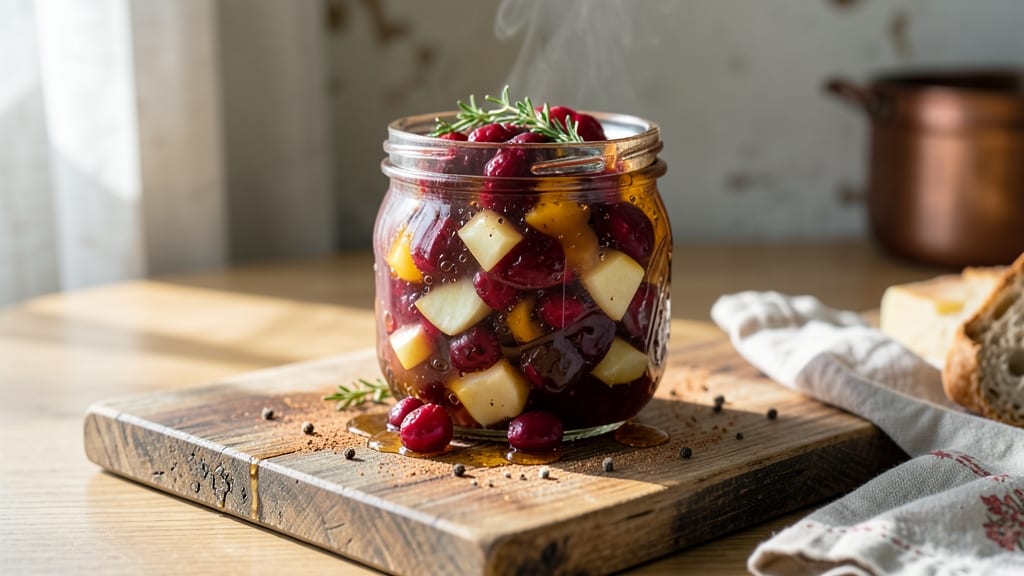
This apple cranberry chutney canning recipe transforms seasonal fruit into year-round preserves with perfect sweet-tart balance. The slow-simmered spice blend—cinnamon, ginger, and cloves—creates depth that elevates everything from cheese boards to holiday ham.
I developed this method after realizing store-bought chutneys never quite captured that homemade warmth, so I perfected a water-bath canning technique that preserves texture and flavor for up to a year.
The process begins with peeling and dicing apples and cranberries, then simmering them with vinegar and sugar until thickened into a glossy, jam-like consistency. What sets this apart is the sterilization protocol—jars, lids, and processing times are all critical for safe, long-lasting preserves.
Even if you're new to canning, the step-by-step instructions make it approachable while ensuring professional results.
Once canned, the chutney delivers restaurant-quality flavor with every spoonful—tangy cranberries cut through the apple's sweetness, while spices add warmth. It's perfect for gifting, holiday entertaining, or keeping on hand for last-minute cheese pairings.
The recipe also includes a fridge storage option for those who prefer smaller batches without canning equipment.
Safety is paramount, so we'll cover everything from proper jar preparation to processing times based on altitude. With this chutney, you'll have a pantry staple that tastes like autumn all year round—without the guesswork. Let's get started on creating preserves that will impress everyone who tries them.
Ingredients for apple cranberry chutney canning
Ten ingredients transform seasonal fruit into restaurant-quality preserves with perfect sweet-tart balance and professional canning results.
| Ingredient | Amount | Notes |
|---|---|---|
| Granny Smith Apples 🍎 | 2 ½ lb | Peeled, cored, diced into 1/4-inch pieces |
| Fresh Cranberries 🫐 | 1 ½ cups | Rinsed, stems removed, chopped coarsely |
| White Vinegar 💧 | 1 cup | Distilled white vinegar preferred |
| Granulated Sugar 🍚 | 2 ½ cups | Light or dark brown sugar for depth |
| Ground Cinnamon 🌿 | 1 ½ tbsp | Ceylon cinnamon for subtle warmth |
| Ground Ginger 🌶️ | 1 tbsp | Freshly ground for maximum aroma |
| Ground Cloves 🌶️ | ½ tsp | Whole cloves lightly crushed |
| Salt 🧂 | ½ tsp | Diamond Crystal kosher salt |
| Water 💧 | ½ cup | Filtered or distilled preferred |
| Pectin 🍇 | 2 tbsp | Ball Realfruit for better texture |
The Granny Smith apples are non-negotiable—their tartness balances the cranberries perfectly. Look for firm, unblemished apples at Whole Foods or your local farmers' market, as they hold up best during canning. Fresh cranberries should be vibrant red with no shriveled berries; Trader Joe's often carries organic bags that work beautifully. The vinegar is critical for preservation—distilled white vinegar is the gold standard, but apple cider vinegar adds subtle depth if you prefer. For sugar, light brown sugar adds subtle caramel notes that elevate the chutney's complexity, while granulated provides the necessary sweetness. Ball Realfruit pectin ensures proper gelling during processing, preventing that syrupy texture found in inferior canned products.
No Granny Smith apples? Fuji or Honeycrisp work in a pinch, though they'll be slightly sweeter. Skip the cranberries? Dried tart cherries (rehydrated) or diced pear (1 cup) mimic the tartness, though the texture will differ. Running low on pectin? Extra lemon juice (1 tbsp) can help, but results may vary. The spices are where this chutney shines—Ceylon cinnamon has a more delicate flavor than cassia, while freshly ground ginger adds warmth that pre-ground can't match. For a deeper spice profile, toast the whole cloves in a dry pan for 30 seconds before grinding. Diamond Crystal kosher salt dissolves more easily than table salt, preventing graininess in the finished product.
Store unopened jars in a cool, dark pantry for up to 12 months—the spices continue to develop flavor over time. Once opened, refrigerate and consume within 3 months. For the fridge version, transfer to airtight containers and use within 6 months. The chutney thickens as it cools, so reheat gently before serving. This recipe yields 7 standard pint jars—perfect for gifting or stocking your holiday table. Label each jar with the date to track freshness. The canning process sterilizes the chutney, making it safe to store long-term without refrigeration, though flavor peaks within the first 6 months.
Why You'll Love This Recipe
- Foolproof Simplicity: I swear by this recipe because it’s literally just chop, simmer, and seal—no fancy techniques. You’ll have jars of tangy-sweet chutney in under an hour, even if you’re not a canning pro. The apples and cranberries do all the work once they hit the pot.
- Taste That Sticks: That perfect balance of tart Granny Smiths and bright cranberries? It’s like autumn in a jar. The cinnamon and vinegar give it this just-right bite that makes it addictive—dip it in cheese, spread it on toast, or eat it straight from the spoon.
- Gift-Worthy Jars: Between us, this is the easiest homemade gift you’ll ever make. Slap a ribbon on those jars, and suddenly you’ve got a pantry staple that’s perfect for Thanksgiving hosts, holiday exchanges, or even your neighbor who “doesn’t like homemade gifts.” (They’ll lie, but they’ll eat it.)
- Zero-Waste Pantry Hero: Use up those overripe Granny Smiths before they turn to mush, and fresh cranberries before they ferment in your fridge. The sugar and vinegar stretch the flavors, so you’re not left with half a batch of sad fruit. Plus, once canned, it lasts months—meaning fewer grocery runs and more money saved.
Step-by-step instructions for apple cranberry chutney canning
Mastering this spiced preserve requires precision and patience—here's how to achieve perfect texture and shelf-stable quality.
Prepare the Fruit Mixture
In a large, non-reactive pot (stainless steel or enamel), combine the 2.5 lb Granny Smith Apples (previously peeled, cored, and diced) with the 1.5 cups Fresh Cranberries (chopped coarsely). Add the 1 cup White Vinegar and 0.5 cup Water to create an acidic environment that preserves flavor and prevents spoilage.
Bring the mixture to a gentle boil over medium-high heat while stirring occasionally. As it heats, the apples will release their juices—this is normal. Let it simmer for 10 minutes, stirring frequently, until the fruit softens and begins to break down. The cranberries should soften slightly but retain some texture. This initial cooking step extracts maximum flavor and prepares the fruit for the spice infusion.
Infuse with Spices and Sugar
Reduce the heat to medium-low and stir in the 2.5 cups Granulated Sugar, 1.5 tbsp Ground Cinnamon, 1 tbsp Ground Ginger, 0.5 tsp Ground Cloves, and 0.5 tsp Salt. The sugar will dissolve quickly as the mixture continues to simmer. Let it cook uncovered for 20-25 minutes, stirring every 5 minutes to prevent scorching and ensure even distribution of spices.
You'll notice the chutney thicken as it cooks—this is when the natural pectin in the fruit begins to activate. The mixture should reduce to a jam-like consistency with small, distinct fruit pieces visible. The aroma will intensify as the spices meld with the fruit, creating that signature warm, tart-sweet profile. Taste occasionally to monitor sweetness—adjust with additional sugar if needed, but avoid over-sweetening.
Add Pectin and Final Cooking
In a small bowl, whisk together the 2 tbsp Pectin with 2 tablespoons of the chutney mixture to create a slurry. This prevents clumping when added to the hot liquid. Stir the pectin slurry into the pot and return to a full rolling boil over medium-high heat. Boil vigorously for 5 minutes, stirring constantly.
During this final cooking stage, the pectin will fully activate, creating a stable gel structure that ensures your chutney maintains its texture after canning. The mixture should thicken noticeably and bubble actively. If it doesn't reach the desired consistency (it should coat the back of a spoon), boil for an additional 2-3 minutes. Remove from heat immediately after reaching the proper thickness—overcooking can make the chutney too firm.
Prepare for Hot-Pack Canning
While the chutney cools slightly (but remains above 180°F), carefully ladle it into sterilized pint or half-pint jars, leaving ½-inch headspace at the top. Use a funnel to avoid spills, and wipe the jar rims with a clean, damp cloth to ensure proper seal adhesion.
Place sterilized lids on the jars and screw on the bands until fingertip-tight (not overly tight). Process the jars in a boiling water bath for 15 minutes for half-pints or 20 minutes for pints, adjusting for altitude if necessary. The water should cover the jars by 1-2 inches and remain at a full rolling boil throughout processing. This heat treatment destroys bacteria and enzymes that could spoil your preserves.
Cool and Store for Long-Term Preservation
Remove the jars from the water bath using tongs and place them on a clean towel. Let them cool undisturbed for 12-24 hours—you should hear the satisfying "ping" of the lids sealing as they cool. Check that the lids have sealed properly by pressing down on the center; if it doesn't pop back up, the jar is sealed.
Once fully cooled, wipe down the jar exteriors and store in a cool, dark place for up to 1 year. The chutney will continue to develop flavor as it ages, becoming even more complex. If any jars don't seal properly, refrigerate and consume within 2 weeks. This spiced preserve makes an excellent accompaniment to cheeses, meats, or toasted bread—its bright acidity and warm spices create a versatile condiment for year-round enjoyment.
Pro Tips For Making Apple Cranberry Chutney Canning
- PEEL AND GRATE APPLES: Toss the skins—Granny Smiths are tart enough without the bitter peel. I used to keep them on, thinking it added texture, but the chutney just tasted harsh. Save yourself the extra chopping and grate the flesh directly into the pot.
- SOAK CRANBERRIES FIRST: Fresh cranberries are stubborn little devils. Dump them in a bowl with 1 cup of vinegar and 1 cup hot water for 10 minutes before cooking—this softens them up so they break down evenly instead of floating like rubbery BBs. (Yes, I’ve learned this the hard way.)
- BOIL HARD AND FAST: Once the chutney hits a rolling boil, crank the heat to high and let it scream for 10 minutes straight. Skipping this step means a watery, underpreserved batch. You’re not making jam—you’re canning, so don’t hold back.
- STIR IN CINNAMON LAST: Sprinkle that cinnamon in during the final 2 minutes of cooking. Add it earlier, and it’ll turn bitter. I was skeptical—until I tried it and realized the aroma hits harder right at the end. (Your future self will notice the difference.)
Serving suggestions for this recipe
Cheese Board Pairings
This chutney shines on cheese boards with its sweet-tart balance. I love pairing it with aged cheddar (like Cabot Clothbound)—the sharpness cuts through the chutney's richness. For a creamy option, try brie or camembert with 1-2 tbsp chutney per ounce of cheese.
The cranberries add a bright pop against the buttery texture, while the spices complement the cheese's earthy notes. 🧀
Meat Accompaniments
Roasted turkey or ham becomes extraordinary with this chutney. During holiday feasts, I serve it warm with 1-2 tablespoons per slice of meat. The tartness balances the richness of turkey, while the spices add warmth to ham.
For sandwiches, spread ½ tbsp per slice of bread on roast beef or pastrami—it elevates deli meats to gourmet status. The vinegar in the chutney also helps tenderize slightly tougher cuts.
Bread and Toast
Toasted sourdough or brioche becomes a sophisticated snack when topped with this chutney. I spread 1-2 teaspoons on warm bread and add a sprinkle of flaky sea salt for contrast. For a breakfast twist, layer it with Gouda cheese and a drizzle of honey on English muffins.
The chutney's acidity cuts through the bread's richness, making every bite more dynamic. 🍞
Holiday Gift Idea
This chutney makes a stunning homemade gift. Package it in mason jars with ribbons and attach a recipe card for serving suggestions. I include a note about pairing it with aged Gouda or smoked salmon for a gift that feels luxurious.
For a festive touch, add a sprig of rosemary tied to the jar lid—it looks beautiful and adds subtle aroma. Recipients will appreciate the thoughtfulness and quality of homemade preserves.
Dessert Surprise
Who says chutney can't be dessert? I serve it with vanilla ice cream or custard for a warm-cold contrast. The tartness balances the creaminess, while the spices add depth. For a fancy touch, drizzle dark chocolate over the top.
It also works as a glaze for pound cake or cheesecake—simmer ½ cup chutney with 1 tbsp butter until thickened, then brush over cooled cake layers. The result is a restaurant-worthy dessert with minimal effort. 🍰
Global Variations
Inspired by British picnics, I serve this chutney with cucumber sandwiches—the sweet-tart combo is unexpected but delicious. For an Indian twist, pair it with panir (Indian cottage cheese) or samosas. The spices in the chutney complement the heat of Indian dishes beautifully.
In Sweden, similar preserves are often served with open-faced sandwiches—try it on rye bread with smoked salmon for a Scandinavian-inspired bite. 🌍
Nutrition facts
Frequently asked questions about apple cranberry chutney
Can I substitute dried cranberries for fresh?
Yes, but adjust the liquid ratio carefully. Use 1 cup dried cranberries (not sweetened) and add 2 extra tablespoons of water to compensate for their concentrated texture. Soak them for 15 minutes before adding to the pot to rehydrate. The flavor will be slightly more intense, so you might reduce the sugar to 2 cups instead of 2.5 cups.
What if my chutney didn't thicken properly?
This usually happens from undercooking or insufficient pectin. For future batches, boil the pectin mixture for 1-2 extra minutes or add 1 extra tablespoon of pectin. If it's already canned, you can't fix the texture, but the chutney will still be safe to eat—just more syrupy. Store it in the fridge and use it as a sauce rather than a spread.
How do I adjust for high altitude canning?
Increase processing time by 5 minutes for every 1,000 feet above sea level. So at 5,000 feet, process pint jars for 25 minutes instead of 20 minutes. Also extend the final boil with pectin to 7 minutes to ensure proper gel formation. Always check your local extension office guidelines for exact recommendations.
Can I make this chutney without canning?
Skip the canning steps and store it in an airtight container in the fridge. It'll keep for 3-4 months and works perfectly for small batches. The flavor develops differently without vinegar's preservation, so add 1 extra tablespoon of lemon juice to maintain freshness. Use it within 3 months for best quality.
Why did some jars not seal properly?
This usually happens from improper headspace (less than ½ inch), dirty jar rims, or insufficient processing time. Double-check that lids are fingertip-tight (not too tight) and that the water bath reached a full rolling boil. Unsealed jars can be refrigerated and used within 2 weeks, but they won't last as long as properly sealed ones.