
Beverages
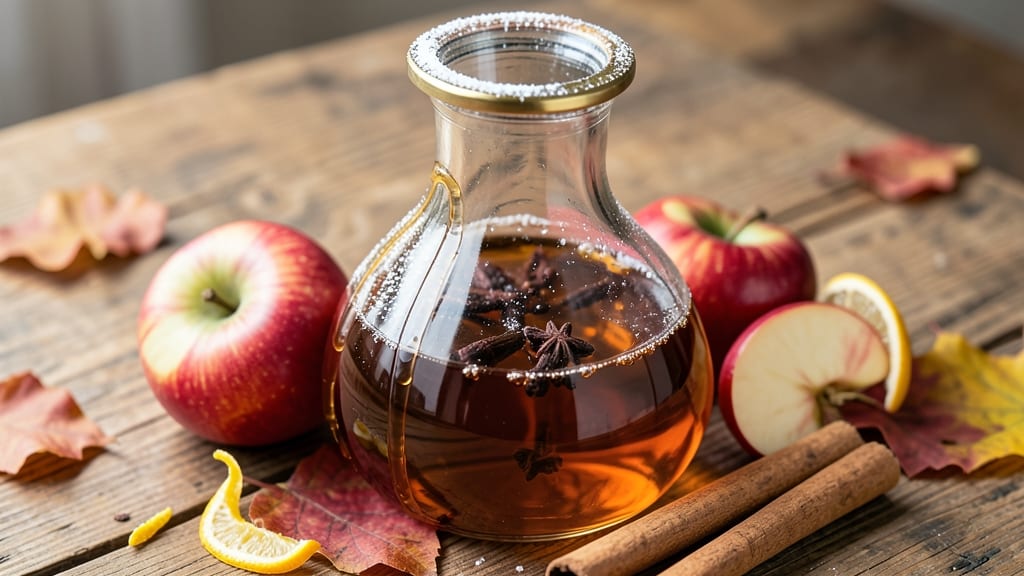
This apple cinnamon wine recipe transforms humble apples into a rich, spiced elixir perfect for autumn gatherings. The slow simmer of apples, cinnamon, and cloves creates deep, aromatic flavors that develop during fermentation, resulting in a beverage that's both comforting and sophisticated.
I've refined this method over years of experimentation to ensure consistent quality and balanced sweetness.
The process begins with a simple spiced apple base that's fermented with yeast and sugar, allowing natural flavors to meld and develop complexity over time. Unlike commercial wines, this recipe gives you control over sweetness, spice levels, and fermentation duration, making each batch uniquely yours.
The key lies in patience—the longer it ferments, the more refined the flavors become.
What you'll end up with is a warm, aromatic wine with notes of caramelized apples, warm cinnamon, and subtle spice undertones. It's versatile enough to sip alone or pair beautifully with cheese boards, roasted meats, or spiced desserts.
The best part? This wine improves with age, becoming even more complex as it develops in your cellar.
Perfect for holiday entertaining or cozy winter nights, this recipe delivers restaurant-quality results with minimal effort. Once you taste your first batch, you'll understand why homemade wine beats store-bought every time. Let's get started on creating your own autumnal elixir.
Ingredients for apple cinnamon wine
Transform humble apples into a spiced autumn elixir with these aromatic ingredients.
| Ingredient | Amount | Notes |
|---|---|---|
| Red Delicious Apples 🍎 | 2 lb | Peeled, cored, sliced thinly |
| Cinnamon Sticks 🌿 | 4 whole | High-quality, aromatic variety |
| Whole Cloves 🌶️ | 8 whole | Freshly picked for best flavor |
| Orange Peel 🍊 | 1 whole | Unwaxed, organic preferred |
| Granulated Sugar 🍚 | 2 cups | White or raw cane sugar |
| Active Dry Yeast 🍞 | ¼ oz | Freshly opened for vitality |
| Filtered Water 💧 | 4 cups | Room temperature preferred |
| Unsweetened Apple Juice 🍏 | 2 cups | Pasteurized for safety |
| Lemon Juice 🍋 | ½ cup | Freshly squeezed for acidity |
| Honey 🍯 | ¼ cup | Raw, unprocessed preferred |
| Diamond Crystal Kosher Salt 🧂 | ½ tsp | For fermentation balance |
| Vanilla Bean 🌸 | 1 whole | Split lengthwise for seeds |
| Star Anise 🌿 | 2 whole | For subtle licorice notes |
The apples are the heart of this wine, so Red Delicious or Granny Smith work best—their balance of sweetness and tartness develops beautifully during fermentation. Organic apples from a local orchard have the most complex flavor, but conventional store-bought will do in a pinch. Look for firm, unblemished fruit with vibrant color. The cinnamon sticks and whole cloves should be aromatic and fragrant—if they smell like dust, toss them. Penzeys Spices or your local bulk bin are great sources for high-quality whole spices. For the orange peel, unwaxed organic is ideal—it adds bright citrus notes without artificial flavors.
No cinnamon sticks? Ground cinnamon at half the amount works, but you'll lose that beautiful aromatic complexity. Short on cloves? Allspice berries or nutmeg can substitute, but adjust to taste. The yeast is non-negotiable—Active Dry Yeast from Red Star is my go-to brand, but any reliable brand will work. For the apple juice, pasteurized is a must—raw juice can introduce unwanted bacteria. The honey adds depth, but maple syrup works too if you prefer. The vanilla bean should be plump and moist
This wine improves with time—1 month minimumyears—the flavors deepen over time. I always make a double batch; the second bottle is always better as it ages.
Why You'll Love This Recipe
- Five-Ingredient Magic: I swear by this recipe—just apples, cinnamon, cloves, orange peel, and sugar. No fancy tools, no stress, and honestly, the hardest part is peeling the orange.
- Warmth in a Glass: That first sip? Pure cozy. The Red Delicious apples bring sweet-tart depth, while the cinnamon and cloves add a spiced hug—like autumn in a mug, but better because you made it.
- Holiday or Hangout: Between us, this is my go-to for Thanksgiving side dishes or when friends drop by unexpectedly. Serve it chilled with brie or warm with vanilla ice cream—it’s that adaptable.
- Pantry Goldmine: Use up those Red Delicious apples before they turn mushy, and the cinnamon sticks? They’ll last for years. I’ve made batches for under $10 and still had leftovers for weeks—minimal cost, maximum comfort.
Step-by-step instructions for apple cinnamon wine
Here's how to craft this aromatic spiced wine that captures autumn's essence in every sip.
Prepare the Apple Base and Spice Infusion
In a large, non-reactive pot, combine the 2 lb peeled, cored, and thinly sliced Red Delicious Apples with the 2 cups unsweetened apple juice, 0.5 cup lemon juice, 0.25 cup honey, and 0.5 tsp Diamond Crystal kosher salt. Stir gently to ensure all apple pieces are submerged. Bring the mixture to a gentle simmer over medium heat for 20-25 minutes until the apples soften and release their juices.
While the apple mixture simmers, create your spice infusion in a small saucepan by combining 4 cups filtered water, 2 cups granulated sugar, 4 whole cinnamon sticks, 8 whole cloves, 2 whole star anise, and the 1 whole orange peel. Bring to a boil, then reduce heat to low and let it steep for 10 minutes to extract maximum flavor. Strain this spiced syrup through a fine-mesh sieve into the apple mixture, discarding the solids.
Add Yeast and Begin Fermentation
Remove the pot from heat and let the apple-spice mixture cool to room temperature (about 75°F). Once cooled, sprinkle the 0.25 oz active dry yeast evenly over the surface. Gently stir to distribute the yeast without creating too many bubbles that could escape. Cover the pot loosely with a clean kitchen towel or lid.
Place the pot in a warm location (around 70-75°F) for 48 hours. You'll notice vigorous bubbling as the yeast activates - this is fermentation in action. After 48 hours, taste the mixture. It should have a tangy, slightly sweet flavor with developing apple notes. If the fermentation seems sluggish after 24 hours, you can gently warm the mixture to 85°F for 10 minutes to stimulate activity.
Add Vanilla and Secondary Fermentation
Split the 1 whole vanilla bean lengthwise and scrape out the seeds. Add both the seeds and empty pod to the fermenting mixture. Stir gently to combine. Transfer the mixture to a glass fermentation vessel (like a food-grade carboy) equipped with an airlock. This secondary fermentation will last 5-7 days at room temperature, during which time the wine will develop more complexity and carbonation.
Check the airlock daily - it should bubble consistently. After 5-7 days, the fermentation will slow significantly. At this point, taste the wine again. It should be developing a beautiful balance of apple, spice, and vanilla notes with a slight effervescence. If you prefer a drier wine, you can extend fermentation for another 3-5 days, but be aware the alcohol content will continue to rise.
Bottle and Age for Maximum Flavor
Once fermentation has completed to your satisfaction, carefully siphon the wine into sterilized glass bottles, leaving about 1 inch of headspace at the top. Seal the bottles tightly and store them in a cool, dark place for at least 4 weeks to allow flavors to meld and mature. The longer you age it (up to 6 months), the more complex and refined the wine will become.
After aging, the wine should have a rich amber color with deep apple, cinnamon, vanilla, and subtle licorice notes from the star anise. Serve chilled in small wine glasses to appreciate its aromatic complexity. This wine pairs beautifully with spiced desserts, cheese platters, or simply enjoyed on its own as a cozy autumn beverage.
Pro Tips For Making Apple Cinnamon Wine
- Peel the Oranges Right: Scrape the peel with a zester—not a knife—so you catch the aromatic oils without bitter pith. I used to just slice the peel, and the flavor was half as bright. A few minutes of careful peeling makes a real difference.
- Sterilize Your Cloves: Drop whole cloves in boiling water for 30 seconds first—this kills any hidden bacteria and prevents off-flavors in your wine. I learned this after a batch tasted weirdly metallic; now I never skip it.
- Core Apples Like a Pro: Use a paring knife to slice a shallow "X" on the bottom of each apple before coring—it keeps them from rolling and makes slicing cleaner. Red Delicious apples bruise easily, so handle them gently after cutting.
- Simmer Gently, Not Hard: Keep the heat at a barely bubbling simmer (180–190°F) to avoid scorching the sugar or turning the wine bitter. I used to crank the heat, and the first batch tasted like burnt caramel. Low and slow is the way.
Essential equipment for this dish
Fermentation Essentials
First, you'll need a food-grade carboy (I use a 5-gallon glass carboy from MoreBeer) for primary fermentation—it's non-reactive and easy to clean. The airlock (like the 3-piece plastic airlock from Winco) is crucial for secondary fermentation, allowing CO₂ to escape while preventing oxygen contamination.
Don't skimp on these—cheap plastic carboys can leach chemicals into your wine. 🌡️
Spice Extraction Tools
A fine-mesh sieve (like the OXO Good Grips) is perfect for straining your spiced syrup cleanly. For the apple base, a sharp peeler (I prefer Mercer Culinary's stainless steel peeler) and a mandoline (for even slices) make prep faster.
A thermometer (like the Thermoworks ThermoPop) ensures you maintain proper fermentation temperatures between 68-75°F.
Sanitation Supplies
Cleanliness is critical for homemade wine. Use Star San (a no-rinse sanitizer) or a 50/50 vinegar-water solution to sterilize all equipment. I keep a bottle brush (like the Winco bottle brush) handy for scrubbing carboys.
A sanitizing bucket (with a tight lid) holds your equipment during fermentation. Never reuse equipment without proper sanitization—contamination ruins batches.
Bottling Equipment
For bottling, you'll need sterilized glass bottles (I use swing-top bottles from MoreBeer) with bottle caps (like the corker and corks from Cork'n It).
A siphon tube (from Winco) helps transfer wine without disturbing sediment. Leave 1 inch of headspace in each bottle—this prevents overflow during aging. 💫
Optional Upgrades
If you're serious about winemaking, consider a hydrometer (like the Aquarium Hydrometer from Amazon) to track sugar conversion and alcohol content. A wine thief (a long tube with a valve) helps sample wine without opening bottles.
For aging, a wine fridge (like the Smeg Mini Fridge) keeps bottles at ideal 55-60°F temperatures. These aren't essential, but they elevate your process significantly.
Nutrition facts
Frequently asked questions
Can I use store-bought apple cider instead of fresh apples?
Yes, but with adjustments! Use 4 cups of high-quality, unpasteurized apple cider (like fresh-pressed) instead of the apple base. Add an extra 1 cinnamon stick and 2 cloves to compensate for the reduced natural flavors. The fermentation process will still work, but the texture will be smoother since there are no apple pieces.
How do I know when fermentation is complete?
Fermentation is done when the airlock stops bubbling for 24 hours and the wine tastes fully developed with no remaining sweetness. For this recipe, most batches finish in 5-7 days after adding yeast. If you prefer a drier wine, extend fermentation by 2-3 more days—just taste daily to monitor progress.
Can I make this wine without yeast?
No, yeast is essential for fermentation! Without it, your apple-cinnamon mixture will simply become a sweetened drink without alcohol. If you're concerned about yeast safety, use a trusted brand like Red Star and follow the recipe's temperature guidelines (70-75°F) for reliable results.
Will this wine get stronger as it ages?
Yes, but not significantly. The alcohol content stabilizes after bottling. However, flavors deepen and mellow over time—think of it like a fine wine. For best results, age for 4-6 weeks before drinking. The longer you wait (up to 6 months), the more complex the spice and apple notes become.
Can I add other spices during fermentation?
Try adding 1 tsp cardamom or 1 strip orange peel during the spice infusion for extra depth. Just avoid overpowering spices like nutmeg or ginger—start with small amounts and adjust to taste. Remove any added spices before bottling to prevent sediment.