
Beverages
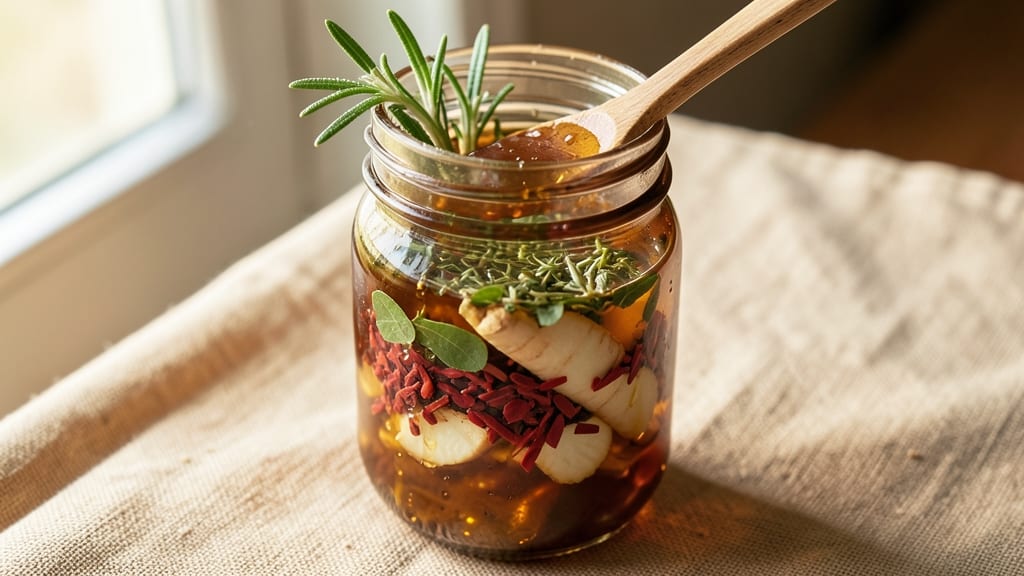
This apple cider vinegar concentrate recipe transforms raw vinegar into a potent, flavor-packed liquid that elevates dressings, marinades, and cocktails. The process is straightforward: simmering apple cider vinegar with complementary ingredients until it reduces to a concentrated essence.
This isn't just vinegar—it's a versatile condiment that adds depth to any dish with a single splash.
The beauty of this concentrate lies in its simplicity and adaptability. You can customize it with herbs like thyme or rosemary, a touch of honey for balance, or even a pinch of chili flakes for heat.
The reduction process intensifies the vinegar's tangy notes while preserving its natural benefits, making it a pantry staple worth its weight in gold.
What you'll end up with is a small jar of liquid gold—thick, aromatic, and packed with flavor. Just a teaspoon can transform a simple vinaigrette into something restaurant-worthy or turn a basic cocktail into a sophisticated sip.
The concentrate keeps beautifully in the fridge for months, ready to enhance your favorite recipes with minimal effort.
Whether you're dressing salads, marinating meats, or crafting cocktails, this concentrate is the secret weapon your kitchen needs. Let's get started on creating something that will change how you use vinegar forever.
Ingredients for apple cider vinegar concentrate
Eight ingredients that transform simple vinegar into liquid gold for dressings, marinades, and cocktails.
| Ingredient | Amount | Notes |
|---|---|---|
| Apple Cider Vinegar 🍏 | 2 cups | Raw, unfiltered preferred |
| Raw Honey 🍯 | ½ cup | Local, unprocessed preferred |
| Fresh Thyme Leaves 🌿 | ¼ cup | Stems removed, loosely packed |
| Fresh Rosemary Sprigs 🌿 | ¼ cup | Finely chopped, stems removed |
| Fresh Ginger Root 🧄 | 1 oz | Peeled, finely grated |
| Red Chili Flakes 🌶️ | 1 tbsp | Adjust for heat preference |
| Sea Salt 🧂 | 1 tsp | Diamond Crystal preferred |
| Black Peppercorns 🌶️ | ½ tsp | Freshly cracked |
The apple cider vinegar is the foundation—Bragg Organic or Texas Pete are my go-tos for their rich apple flavor. Raw honey adds depth while balancing the acidity, so local, unfiltered honey works best if you can find it. Fresh thyme and rosemary? Grow your own or grab from the grocery store's herb section—they're fresher than dried and make a noticeable difference. The ginger needs to be freshly grated (the pre-grated stuff loses potency fast), and I always double-check the chili flakes are labeled 'cayenne'—some blends contain paprika that won't deliver the heat.
No raw honey? Maple syrup or agave nectar work in a pinch, though the flavor will be slightly sweeter. Skip the herbs? Dried thyme at one-third the amount still adds aroma, but fresh is ideal. The ginger can be swapped for 1/2 tsp ground ginger, though it won't have the same zing. Running low on chili flakes? Crushed red pepper or a pinch of cayenne powder does the trick. For the salt, Diamond Crystal kosher dissolves best, but any fine sea salt works. The peppercorns? Toast them lightly in a dry pan first—it deepens their aroma.
This concentrate keeps for 6-12 months in the fridge, so make a big batch. Store it in a dark glass jar (amber or cobalt) to protect from light. I always make two batches at once—one for savory uses, one with extra honey for sweet applications. The flavor actually improves over time as the ingredients meld. When using, start with 1/2 tsp and adjust to taste—it's more concentrated than you'd think.
Why You'll Love This Recipe
- No-Chop Necessary: I swear by this recipe because it’s the kind of thing you can make while staring at a pot of boiling water. Just toss in the whole sprigs of rosemary and thyme—no snipping, no fuss—and let them steep. The ginger? Grate it fresh, but even that’s just a few minutes of work. Honestly, this is the kind of concentrate that makes me feel productive without actually stressing me out.
- Warm & Tangy Magic: Between us, this isn’t your basic vinegar. The raw honey rounds out the sharpness of the apple cider vinegar, while the ginger adds a slow-burning zing that lingers. I’ll be real: the first time I drizzled it over roasted Brussels sprouts, my partner asked for the recipe before I even sat down. That’s when I knew it was good.
- Pantry Staple Upgrade: Here’s what sold me—this stuff doesn’t just sit there. Use it to glaze grilled chicken, stir it into salad dressings, or even mix a spoonful into sparkling water for a fancy-sounding drink. I keep a jar in my fridge and freezer because it’s that versatile. (Yes, even on a Tuesday night when I’ve got nothing planned.)
- Lasts for Months: Not the prettiest jar in my cupboard, but this concentrate keeps for ages—I’ve had it for nearly three months, and it’s still bold. Plus, it’s dirt cheap to make. A little goes a long way, so you’re not scrambling to buy more every week. My secret weapon for when I’m broke but still want to eat well.
Step-by-step instructions for crafting apple cider vinegar concentrate
Unlock the potent benefits of this fermented elixir through precise layering and careful fermentation.
Prepare the Herb-Ginger Base
In a clean, dry quart-sized mason jar, combine the 0.25 cup fresh thyme leaves and 0.25 cup finely chopped fresh rosemary sprigs. Use your fingers to gently press them against the jar's sides to create space for the remaining ingredients. This packing ensures maximum surface area for infusion.
Next, add the 1 oz peeled, finely grated fresh ginger root to the jar. The ginger should distribute evenly among the herbs. Sprinkle the 1 tablespoon red chili flakes over the top, then add the 1 teaspoon sea salt and 0.5 teaspoon freshly cracked black peppercorns. Give the jar a gentle shake to distribute these dry ingredients evenly throughout the herb mixture.
Combine with Honey and Vinegar
In a separate bowl, whisk together the 0.5 cup raw honey and 2 cups raw, unfiltered apple cider vinegar until the honey dissolves completely. This mixture should be smooth and homogeneous—any undissolved honey will settle at the bottom, so take your time stirring. The honey acts as both a natural preservative and a sweet counterbalance to the vinegar's acidity.
Pour this honey-vinegar mixture into the jar containing the herbs and spices. Use a long-handled spoon to gently press down on the ingredients, ensuring everything is submerged beneath the liquid. Leave about 1 inch of headspace at the top of the jar—this prevents overflow during fermentation and allows for proper sealing.
Seal and Ferment at Room Temperature
Secure the jar lid tightly and place it in a dark, cool spot (around 70-75°F) for 7-10 days. The ideal location is away from direct sunlight and heat sources. During this period, you'll notice tiny bubbles forming along the jar's sides—this is natural carbonation from the fermentation process.
After 7 days, give the jar a gentle shake to redistribute any settled ingredients. Continue fermenting for 3-5 additional days until the mixture develops a rich, complex aroma with notes of apple, ginger, and herbs. The color should deepen to an amber hue, indicating full infusion. This is when the concentrate reaches its peak potency.
Strain and Store for Maximum Potency
After fermentation, carefully strain the mixture through a fine-mesh sieve or cheesecloth into a clean glass jar. Press the solids gently with a wooden spoon to extract every last drop of concentrate. Discard the herb-spice mixture—it's spent its purpose but has infused the liquid beautifully.
The finished concentrate should have a thick, syrupy consistency with a vibrant amber color. Store it in the refrigerator for up to 3 months or in a cool, dark pantry for 1 month. Use it as a potent dressing, marinade, or health tonic—just remember, a little goes a long way with this concentrated flavor.
Pro Tips For Making Apple Cider Vinegar Concentrate
- STEAM THE GINGER FIRST: I used to just grate raw ginger straight into the mix, but it always tasted sharp and underdeveloped. Instead, slice it thin (about 1/8-inch) and steam it for 3-4 minutes in a small pot with just enough water to cover the bottom—this softens the heat and unlocks deeper flavor. Drain it, then chop fine for the concentrate.
- USE A MORTAR FOR THYME: Fresh thyme leaves are stubborn—no matter how much you chop them, they stay clumpy. Skip the knife entirely and crush them in a mortar with a pinch of salt first. This releases their oils and blends them smoothly into the honey-vinegar mix without bitterness. (Yes, it’s extra work, but the aroma difference is noticeable.)
- LOW HEAT ONLY: I learned this the hard way—simmering this concentrate on medium-high heat turns the honey bitter and the vinegar harsh. Keep it at a bare simmer, just enough to see tiny bubbles at the edges of the pot, and stir occasionally. If it smells like nail polish remover, you’ve gone too far.
- HONEY LAST, NOT FIRST: Adding raw honey to the vinegar too early makes it cook out faster and lose its floral depth. Instead, stir in the honey only in the final 5 minutes of simmering—this preserves its texture and sweetness. If you’re impatient (like me), at least reduce the vinegar first until it’s syrupy before mixing in the honey.
Troubleshooting your apple cider vinegar concentrate
Fermentation Gone Wrong
If your concentrate smells sour or putrid after fermentation, it means harmful bacteria took over instead of beneficial microbes. This usually happens when the jar isn't properly sealed or temperatures exceed 85°F.
To fix it, discard the batch immediately—don't risk consuming it. Always use a sterilized mason jar and store it in a cool (70-75°F) spot away from direct sunlight. 🌡️
Mold Growth
Tiny black or white spots on the surface? That's mold, which can develop if the jar isn't submerged properly or if the fermentation environment is too warm. If you spot mold, toss the batch—it's not safe to eat.
To prevent this, ensure all ingredients are fully submerged under the vinegar mixture and leave 1 inch of headspace in the jar. After fermentation, strain immediately to avoid mold spores settling.
Honey Not Dissolving
If your honey stays grainy or clumps instead of dissolving, it's likely too thick or cold. Warm the vinegar slightly (no hotter than 120°F) before mixing to help dissolve the honey. Stir vigorously with a whisk or immersion blender for 2-3 minutes to ensure complete integration.
If using raw honey, it may take longer—be patient and let it sit for 10 minutes before checking again.
Weak Flavor
A concentrate lacking depth usually means insufficient fermentation time or weak ingredients. For stronger flavor, extend fermentation to 12-14 days in a dark, cool spot. Use high-quality raw honey and fresh herbs—dried spices won't infuse as well.
If the taste is still mild, reduce the concentrate further by simmering it uncovered on low heat for 10-15 minutes to intensify the flavors. 💡
Cloudy or Separated Liquid
Cloudiness or separation often occurs if the jar wasn't sealed properly or if the ingredients weren't mixed thoroughly. To fix this, strain the concentrate through a fine-mesh sieve or cheesecloth into a clean jar.
If the liquid separates again, it may need gentle reheating (100°F max) to re-emulsify. Store it in a dark glass jar to prevent future separation—light exposure can degrade the concentrate's quality over time.
Too Strong or Bitter
An overly acidic or bitter concentrate happens when the fermentation goes too long or the honey-to-vinegar ratio is off. To balance it, add 1-2 teaspoons of maple syrup or agave per ½ cup of concentrate and stir well.
If the bitterness persists, dilute slightly with apple cider vinegar (1:1 ratio) before using. For future batches, reduce fermentation time to 7-10 days and adjust honey to ¼ cup per 2 cups of vinegar for a milder taste.
Nutrition facts
Frequently asked questions
Can I use this concentrate in cocktails?
This concentrate adds depth to cocktails like a tangy, herbal twist. Try adding ½ teaspoon to a whiskey sour or gin fizz for a sophisticated apple-cider kick. For a non-alcoholic option, mix it with sparkling water and a splash of lime. The honey balances the acidity while the herbs add complexity—perfect for elevating your favorite drinks!
How do I adjust the sweetness level?
Start with the ½ cup honey ratio, but you can tweak it based on taste. For less sweetness, reduce honey to ¼ cup and add 1 tablespoon maple syrup after fermentation. If you prefer it sweeter, increase honey to ⅔ cup before fermenting. Remember, the concentrate is potent—start small and adjust gradually!
What’s the best way to store it long-term?
For maximum shelf life, store your concentrate in a dark glass jar (amber or cobalt) in the fridge, where it keeps for 6-12 months. If storing at room temperature, use it within 1 month in a cool, dark pantry. The fridge preserves freshness and prevents flavor degradation from light exposure. Label your jar with the date to track freshness!
Can I make this without honey?
Yes! Swap honey for ¼ cup maple syrup or agave nectar for a vegan option. The sweetener balances the vinegar’s acidity, though honey adds unique depth. For a completely sugar-free version, reduce the honey to 2 tablespoons and add 1 teaspoon vanilla extract to enhance flavor. The concentrate will still work but may have a sharper tang without sweetness.
How much concentrate should I use in dressings?
Start with 1 teaspoon per ¼ cup dressing—this concentrate is potent! For a classic vinaigrette, mix 1 tsp concentrate with 2 tbsp olive oil and 1 tbsp Dijon mustard. Adjust to taste, but remember: a little goes a long way. The herbs and spices will infuse the oil beautifully, so don’t be afraid to experiment with ratios!