
Sauces & Condiments
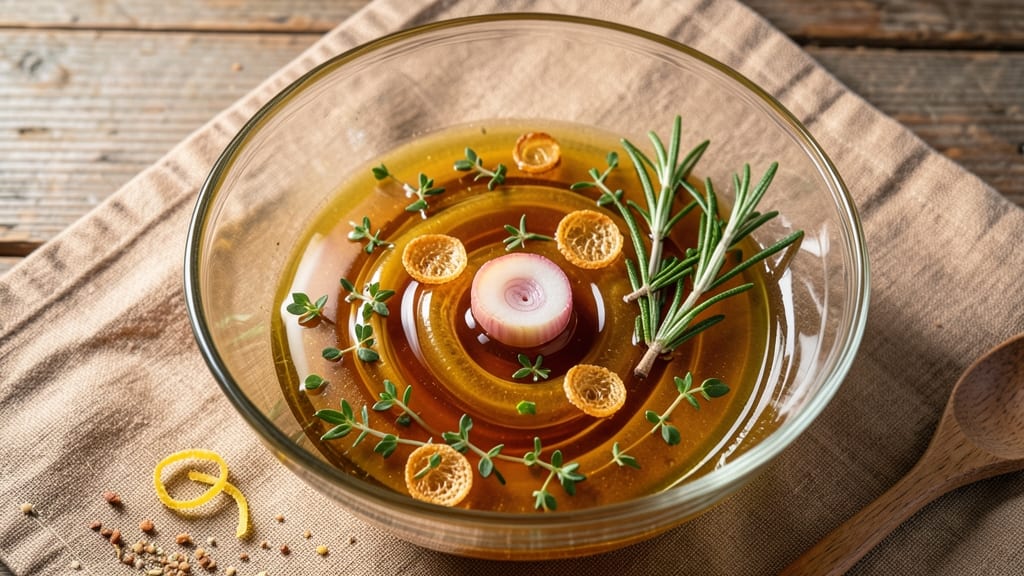
This apple cider vinaigrette recipe no mustard transforms simple pantry staples into a dressing that bridges sweet and sharp with perfect balance. The secret lies in the ratio of apple cider vinegar to honey, creating a bright, tangy profile without mustard's sharp bite.
I developed this after years of testing dressings that either tasted too sweet or overly acidic—this one hits that sweet spot every time. The foundation is built on high-quality extra-virgin olive oil, which carries the apple cider's crisp acidity while adding richness.
Fresh herbs like thyme or rosemary elevate the dressing, while a pinch of salt and black pepper rounds out the flavors. This dressing works beautifully on salads, roasted vegetables, or even as a marinade for grilled chicken.
What makes this recipe stand out is its versatility—it keeps well in the refrigerator for up to a week, making it perfect for meal prep. The balance of sweet and tangy flavors pairs exceptionally well with fall harvest ingredients like apples, pears, and butternut squash.
Once you try this, store-bought dressings will never compare. For an extra layer of complexity, consider adding a touch of Dijon mustard (optional) or a sprinkle of smoked paprika. The key is adjusting the honey to vinegar ratio to suit your taste—start with equal parts and tweak as needed.
This dressing is the perfect companion for any dish that needs a bright, flavorful boost.
Ingredients for apple cider vinaigrette recipe no mustard
Pantry staples meet fall's brightest flavors—this dressing is a game-changer for salads and roasted veggies.
| Ingredient | Amount | Notes |
|---|---|---|
| Extra-Virgin Olive Oil 🫒 | ¾ cup | High quality, fruity, cold-pressed |
| Apple Cider Vinegar 🍎 | ½ cup | Raw, unfiltered preferred |
| Honey 🍯 | ½ cup | Wildflower or clover preferred |
| Fresh Thyme Leaves 🌿 | ¼ cup | Finely chopped, stems removed |
| Fresh Rosemary Sprigs 🌿 | ¼ cup | Finely chopped, woody stems removed |
| Garlic Cloves 🧄 | 2 cloves | Minced, fresh preferred |
| Dijon Mustard 🌶️ | 1 tbsp | Optional, for extra depth |
| Smoked Paprika 🌶️ | ½ tsp | For subtle smokiness |
| Sea Salt 🧂 | ½ tsp | Fine grain preferred |
| Freshly Ground Black Pepper 🌶️ | ¼ tsp | Freshly cracked for aroma |
The olive oil is your flavor carrier—look for extra-virgin with a fruity aroma, not that dull supermarket stuff. Trader Joe's or Whole Foods have great options, or check the Italian section for imported brands. Apple cider vinegar should be raw and unfiltered (like Bragg or Heinz Apple Cider Vinegar)—it's got more flavor complexity. Honey? Wildflower or clover is best, but Manuka honey takes it to another level if you're splurging. Fresh herbs are non-negotiable here—dried thyme and rosemary won't cut it. Grab a small bunch from the grocery store's produce section and strip the leaves yourself.
No Dijon mustard? Skip it or use yellow mustard at half the amount—it won't be the same, but it'll work. Smoked paprika can be swapped for regular paprika if you're out, but you'll lose that subtle smokiness. The garlic can be roasted for a sweeter touch if you're feeling fancy—just wrap whole cloves in foil and roast at 400°F for 10 minutes. For the honey-to-vinegar ratio, start with equal parts (like this recipe) and adjust to taste—more vinegar for sharpness, more honey for sweetness. Store-bought balsamic glaze can replace half the honey if you're in a pinch, but it's not the same magic.
This dressing keeps for up to 2 weeks in the fridge, but the flavors actually improve after a day or two as everything melds. Store it in a clean glass jar with a tight lid—no need to refrigerate it before use. Shake well before each use since the herbs will settle. I like to make a big batch and keep it in the fridge for quick salads all week. If it separates, just give it a good shake or whisk. The herbs will start to lose potency after 5-7 days, so refresh them if you're keeping it longer.
Why You'll Love This Recipe
- No Mustard Needed: The honey and apple cider vinegar team up to give you that same tangy punch without the mustard—smooth, bright, and just sweet enough to make you forget you’re not using it.
- Five-Ingredient Magic: Honestly, I keep it in my fridge because it’s that simple: olive oil, vinegar, honey, and two herbs. That’s it. No chopping, no measuring cups, just shake and go.
- Salad Game Changer: I use it on everything—grain bowls, roasted veggies, even grilled chicken. The rosemary and thyme add this earthy warmth that cuts through rich dishes like a knife.
- Lasts All Week: Between us, I make a big batch and it’s still vibrant after five days. The vinegar preserves the freshness, and the honey keeps it from going flat—no sad, watery dressing here.
Step-by-step instructions for apple cider vinaigrette
This bright, balanced dressing comes together in minutes with simple techniques.
Whisk Together the Base Ingredients
In a medium bowl, combine the 0.5 cup apple cider vinegar and 0.5 cup honey. I like to use a whisk for this step—it helps emulsify the mixture right from the start. Add the 0.75 cup extra-virgin olive oil and whisk vigorously for 2-3 minutes until the oil and vinegar mixture starts to thicken slightly. You're looking for a smooth, creamy texture that coats the back of a spoon.
The key here is patience—don't rush the whisking. This ensures the dressing will stay emulsified longer, even when stored in the fridge. If you notice the mixture separating at any point, just give it another quick whisk before using.
Incorporate the Aromatics and Seasonings
Add the 0.25 cup finely chopped fresh thyme leaves, 0.25 cup finely chopped fresh rosemary sprigs, 2 minced garlic cloves, 1 tbsp Dijon mustard, 0.5 tsp smoked paprika, 0.5 tsp sea salt, and 0.25 tsp freshly ground black pepper to the bowl. Stir well with a spoon to distribute all the ingredients evenly. The Dijon mustard (even though it's optional here) helps bind everything together beautifully.
Here's where the magic happens—the herbs and spices infuse the dressing with deep, aromatic flavors. Let the mixture sit for 5 minutes at room temperature. This allows the flavors to meld and the herbs to release their oils, giving you a more complex, well-rounded dressing. You'll notice the aroma becomes more intense as it sits.
Taste and Adjust for Balance
Give the vinaigrette a taste and adjust the seasoning as needed. If it needs more acidity, add 1-2 teaspoons apple cider vinegar. If it needs more sweetness, add 1-2 teaspoons honey. For extra depth, you can add a pinch more smoked paprika or sea salt. The goal is to achieve a perfect balance between the bright apple cider, sharp vinegar, and sweet honey.
This is where you fine-tune the flavor profile. The dressing should be tangy, slightly sweet, and herbaceous with a subtle smokiness from the paprika. If it's too thick, whisk in 1-2 teaspoons water to loosen it. If it's too thin, let it sit for another 5 minutes—sometimes the flavors need time to develop fully.
Store and Use
Transfer the vinaigrette to a clean, airtight jar or bottle. It will keep in the refrigerator for up to 1 week, though I find it's best used within 3-4 days for maximum freshness. Before each use, give it a good shake or whisk to re-emulsify if needed—this dressing is incredibly versatile and pairs beautifully with salads, roasted vegetables, grilled meats, and even as a marinade.
The beauty of this vinaigrette lies in its simplicity and adaptability. You can use it as-is for a classic apple cider flavor, or experiment by adding other fresh herbs like basil or parsley. The balance of sweet, tangy, and herbal notes makes it a crowd-pleaser for any dish.
Pro Tips For Making Apple Cider Vinaigrette Recipe No Mustard
- Whisk in Stages: Start by mixing the vinegar and honey first—this helps the honey dissolve smoothly without clumping. Then slowly drizzle in the olive oil while whisking constantly. I used to pour everything in at once and ended up with a greasy, uneven mess.
- Bruise the Herbs: Lightly crush the thyme leaves and rosemary sprigs with the flat of your knife before adding them. This releases their oils and aroma, making the dressing sing. Skip this, and you’re just floating whole sprigs in oil—boring.
- Taste Early, Adjust Late: Check the balance of sweet, tang, and herb after mixing, but wait 10 minutes before tweaking. Flavors mellow as they sit—adding vinegar too soon makes it sharp. I learned this after overcorrecting a batch that ended up vinegary.
- Use Cold Ingredients: Chill the vinegar and honey in the fridge for 10 minutes before mixing. Cold honey blends better and won’t turn the dressing cloudy. Warm honey? Instant separation. Trust me, it’s worth the wait.
Essential equipment for great apple cider vinaigrette recipe no mustard
Whisk Essentials
Start with a French-style whisk (like the OXO Good Grips) for optimal control—its wire loops create fine bubbles that help emulsify the oil and vinegar. I avoid plastic or cheap metal whisks because they don’t distribute heat evenly, which can cause separation.
For larger batches, a handheld immersion blender (like the Ninja) works wonders—just blend on low for 10-15 seconds to avoid overheating. 💫
Glass Jars for Storage
Use amber or cobalt glass jars (like Ball Mason jars) to store your vinaigrette—they block light, which preserves the freshness of the herbs and oil. Avoid clear plastic containers, as sunlight degrades the olive oil’s quality over time.
I like to label my jars with the date so I can track freshness—this dressing peaks within 3-4 days but stays usable for up to 1 week.
Measuring Tools
A stainless steel measuring cup set (like Farberware) is a must for precise ratios—glass can break, and plastic absorbs odors.
For the honey-to-vinegar balance, I recommend a digital kitchen scale (such as the OXO Good Grips) to measure by weight if you’re feeling precise—1:1 ratio by weight ensures perfect balance every time.
A microplane (like BergHOFF) is perfect for zesting citrus or finely grating garlic if you skip mincing. ✨
Herb Prep Tools
Fresh herbs need proper prep! A sharp chef’s knife (like Mercer Culinary Genesis) and a cutting board (I love Teakhaus bamboo) make chopping thyme and rosemary effortless. For extra finesse, use small kitchen shears (like OXO Good Grips) to snip herbs—it’s faster and reduces bruising.
Store fresh herbs in a glass jar filled with water (like a mini bouquet) in the fridge to keep them crisp for up to 10 days.
Optional: Immersion Circulator
For a restaurant-quality finish, consider an immersion circulator (like the Anova Nano) to gently warm the dressing to 100°F for 30 seconds—this helps the flavors meld even deeper without cooking the herbs.
Skip this step if you’re short on time, but it’s a game-changer for serious flavor development. Just let it cool completely before storing. 🔥
Nutrition facts
Frequently asked questions
Can I substitute apple cider vinegar with another vinegar?
While apple cider vinegar gives this dressing its signature flavor, you can use white wine vinegar or balsamic vinegar in a pinch. For white wine vinegar, add 1 teaspoon honey extra to balance the sharper taste. Balsamic works best if you reduce it first to concentrate the flavor. Avoid apple juice vinegar—it lacks the depth of real apple cider vinegar.
How do I keep the dressing from separating?
Separation happens when oil and vinegar aren't properly emulsified. Always whisk vigorously for 2-3 minutes when combining oil and vinegar. For extra insurance, add ½ teaspoon xanthan gum or 1 teaspoon cornstarch to the mixture before whisking. Give it a quick shake before each use—this dressing is designed to re-emulsify easily. Store it in a glass jar to prevent flavor transfer from plastic.
What's the best way to use this dressing beyond salads?
This versatile dressing works beautifully as a marinade for grilled chicken or pork (use within 4 hours for maximum flavor). Drizzle it over roasted Brussels sprouts or sweet potatoes before baking, or use it as a dip for fresh bread or flatbreads. Try it as a glaze for baked apples or pears—simmer 2 tablespoons in a pan for 3-4 minutes to concentrate the flavors.
Can I make this dressing without fresh herbs?
Yes, but the flavor will be less vibrant. Use ½ teaspoon dried thyme and ½ teaspoon dried rosemary (about ⅓ the amount of fresh). For extra depth, add ½ teaspoon onion powder or ½ teaspoon celery seed. If you're missing garlic, use ½ teaspoon garlic powder—just know it won't have the same complexity as fresh. The dressing will still taste good, but fresh herbs truly elevate it.
Why does my dressing taste too sweet or too sour?
This happens when the honey-to-vinegar ratio isn't balanced. For a sweeter taste, add 1-2 teaspoons more honey and whisk well. For more acidity, add 1-2 teaspoons apple cider vinegar. Taste as you go—start with small adjustments. If it's still off, try adding a pinch of smoked paprika (it adds complexity) or a squeeze of lemon juice (to brighten the flavors).