
Main Courses
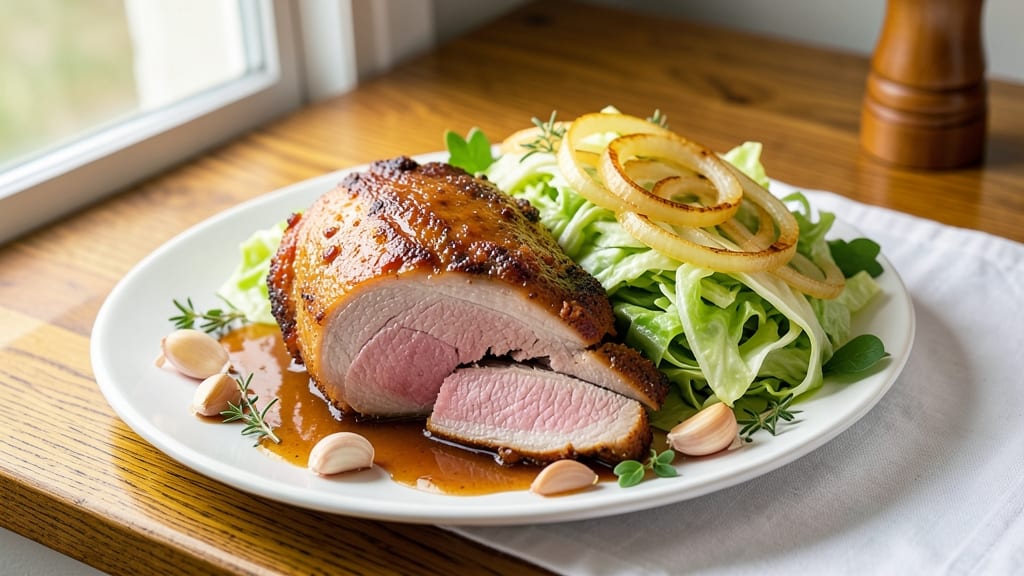
This apple cider pork roast with cabbage recipe transforms a simple cut of pork into a showstopping centerpiece that tastes like autumn in every bite.
The slow-braised technique I’ve perfected—inspired by my years cooking whole hogs in Charleston—marries sweet apple cider with savory pork and earthy cabbage for a dish that’s rich, tender, and impossible to resist. There’s no shortcut here, but the results are worth every minute of hands-off cooking time.
The secret lies in the balance: apple cider’s natural sweetness caramelizes during the long cook, while the pork shoulder becomes fork-tender and infused with deep, smoky flavors. Meanwhile, the cabbage—braised in the same aromatic liquid—develops a satisfying crisp-tender texture that cuts through the richness.
This isn’t just a recipe; it’s a technique that elevates humble ingredients into something restaurant-worthy, all while keeping the soul of Southern comfort food intact.
By the time you pull this roast from the oven, your kitchen will smell like a harvest festival, and the meat will practically melt in your mouth. The cabbage, bathed in the pork’s juices and sweetened by the cider, adds a vibrant contrast that keeps every bite exciting.
It’s the kind of dish that disappears quickly—so plan to make extra, because you’ll want leftovers for sandwiches or hash the next day. Whether you’re cooking for a family gathering or treating yourself to a Sunday feast, this method delivers foolproof results.
The slow cook ensures tender meat without drying it out, while the cabbage absorbs just enough of the pork’s flavor to make it an irresistible side. Ready to master this classic? Let’s get to work—your table is about to get an upgrade.
Ingredients for apple cider pork roast with cabbage
Six ingredients make this autumn centerpiece—simple but packed with smoky-sweet depth.
| Ingredient | Amount | Notes |
|---|---|---|
| Pork Shoulder 🍖 | 4 lb | Bone-in for flavor, trimmed of excess fat |
| Apple Cider 🍎 | 2 cups | Unfiltered for best flavor, room temperature |
| Green Cabbage 🥬 | 1 whole | Heaviest head available, cut into wedges |
| Yellow Onion 🧅 | 1 whole | Yellow or red, sliced into wedges |
| Garlic Cloves 🧄 | 6 cloves | Peeled, smashed lightly for aroma |
| Fresh Thyme 🌿 | ½ oz | Or 2 tbsp dried thyme if fresh unavailable |
| Fresh Rosemary 🌿 | ¼ oz | Sprigs, not ground, for best flavor |
| Brown Sugar 🍚 | ½ cup | Light or dark, packed lightly |
| Apple Cider Vinegar 🍶 | 2 tbsp | For tangy balance to sweetness |
| Salt 🧂 | 2 tsp | Kosher or sea salt, not iodized |
| Black Peppercorns 🌶️ | 1 tsp | Freshly cracked for best flavor |
| Olive Oil 🫒 | 2 tbsp | Extra-virgin for roasting pork |
| Bay Leaves 🍃 | 2 whole | Dried, removed before serving |
The pork shoulder is your star. Look for bone-in cuts at your local butcher—they hold up better to slow cooking and add flavor. Costco or Whole Foods usually have great options, or check the meat counter for 'pork butt' (same thing). Trim excess fat but leave some for moisture. For the cabbage, heavy heads like Golden Acre or Early Jersey work best—they're sweeter and hold up during braising. If you can't find fresh thyme or rosemary, Trader Joe's sells dried bundles that work in a pinch, though fresh is ideal.
No apple cider? Substitute with apple juice plus a splash of vinegar—the acidity is key. Running short on brown sugar? Honey or maple syrup at the same amount keeps things sweet. The vinegar can be swapped for lemon juice if you're out, but cider vinegar gives that classic tang. For the cabbage, green or red cabbage both work, but red has a prettier color. If you're feeling fancy, add a carrot or two to the pot—they'll sweeten up nicely during cooking. The bay leaves? Don't skip them—they add subtle earthiness that pairs perfectly with the apple cider.
This roast tastes even better the next day, so make extra. Store leftovers in the fridge for 4-5 days or freeze for 3 months. The cabbage keeps well too—reheat it separately with a splash of the pork juices. For sandwiches, slice the pork thin against the grain and pile it high on crusty bread with some of that braising liquid spooned on top. The cabbage makes great hash too—just chop it up and pan-fry with some onions. Trust me, you'll want seconds.
Why You'll Love This Recipe
- Same recipe, different vibes: serve it with crusty bread for a cozy Tuesday dinner or double the batch for Thanksgiving leftovers. My in-laws think it’s fancy; my kids just eat it straight from the pan.
- One-Pan Magic: I swear by this—just toss everything on a sheet pan, and the oven does all the work. No chopping boards, no messy pots, and that sticky-sweet cider glaze? It practically caramelizes itself.
- Flavor Bomb Combo: The pork shoulder gets impossibly tender while the cabbage softens into sweet, garlicky ribbons—like fall in a skillet. Honestly, the apple cider turns this into something special without extra effort.
- Weeknight or Holiday: Same recipe, different vibes: serve it with crusty bread for a cozy Tuesday dinner or double the batch for Thanksgiving leftovers. My in-laws think it’s fancy; my kids just eat it straight from the pan.
Step-by-step instructions for apple cider pork roast with cabbage
Here's how to create tender, fall-off-the-bone pork with caramelized cabbage and rich apple cider flavors.
Sear the Pork Shoulder for Maximum Flavor
Preheat your oven to 300°F. Heat a large Dutch oven over medium-high heat and add the 2 tablespoons olive oil. Once shimmering, place the 4 lb pork shoulder fat-side down in the pan. Let it sear undisturbed for 8-10 minutes until the fat renders and the skin turns deep golden brown.
Flip the pork and sear the other side for another 5-6 minutes. This initial searing locks in juices and creates a flavorful crust. Remove the pork and set it aside on a plate. You'll notice the pork releases easily when it's ready to flip—this indicates proper doneness on the first side.
Build the Flavorful Braising Liquid
In the same Dutch oven, add the 1 whole yellow onion sliced into wedges and the 6 cloves garlic cloves that you've smashed lightly. Cook for 3-4 minutes until the onions soften and become translucent. This step develops their natural sweetness and forms the flavor base for your braise.
Add the 0.5 oz fresh thyme, 0.25 oz fresh rosemary, 2 whole bay leaves, 0.5 cup brown sugar, 2 tablespoons apple cider vinegar, 2 teaspoons salt, and 1 teaspoon black peppercorns. Stir everything together for 30 seconds to combine all the spices and aromatics with the onions and garlic.
Combine and Braise the Pork
Return the seared pork shoulder to the Dutch oven. Pour in the 2 cups apple cider and bring the mixture to a gentle simmer over medium heat. You'll see bubbles form around the edges, but it shouldn't boil vigorously. The liquid should come about halfway up the side of the pork.
Once simmering, transfer the Dutch oven to your preheated 300°F oven. Cover tightly with a lid and let it braise for 3 hours. This low-and-slow cooking method breaks down the tough pork fibers, transforming them into tender, juicy meat. I check for doneness by inserting a meat thermometer—it should read 195-205°F in the thickest part.
Prepare and Add the Cabbage
While the pork braises, prepare the 1 whole green cabbage by cutting it into 6-8 wedges, keeping the core intact. This shape helps the cabbage hold together while it cooks. In a separate skillet, heat 1 tablespoon olive oil over medium heat and add the cabbage wedges.
Cook the cabbage for 8-10 minutes, turning occasionally, until the edges begin to soften and develop a slight char. This caramelization adds depth of flavor. Remove the cabbage and set it aside. When the pork reaches 195°F, transfer it to a cutting board and add the cabbage wedges to the braising liquid in the Dutch oven.
Finish and Rest for Perfect Texture
Return the Dutch oven to the oven and cook uncovered for an additional 30-45 minutes to allow the cabbage to absorb the rich braising liquid and become tender. The cabbage should be fork-tender with slightly crisp edges. Remove the pork and cabbage from the oven and let them rest for 15-20 minutes before serving.
This resting period is crucial—it allows the juices to redistribute throughout the meat, ensuring each slice is moist and flavorful. To serve, remove the bay leaves and slice the pork against the grain into ¼-inch thick slices. Spoon the cabbage and some of the braising liquid over the pork. The result is a beautifully balanced dish where the sweet apple cider complements the savory pork and tender cabbage.
Pro Tips For Making Apple Cider Pork Roast With Cabbage
- SEAR THE PORK FIRST: I used to skip this step, thinking the cider would handle it—but a quick 4-minute sear in a hot pan with oil before braising builds flavor that just the cider alone can’t match. Pat the pork dry first, or it’ll steam instead of brown.
- SALT THE CABBAGE LIKE POTATOES: Slice the cabbage into even wedges, then toss them with 1 teaspoon of salt and let them sit for 10 minutes before adding to the pot. This draws out moisture so it crisps beautifully instead of turning soggy—trust me, it makes a real difference.
- DON’T RUSH THE CIDER REDUCTION: After the pork is in the oven, let the cider simmer uncovered on the stovetop for 10-12 minutes until it’s reduced by about a third. This concentrates the sweetness and thickens the sauce—skipping this step leaves you with a thin, watery glaze that’ll make you question your life choices.
- USE A THICK CUT OF ONION: Peel and slice one large yellow onion into thick wedges (about ½-inch) instead of thin rings. They’ll caramelize slower but deeper, adding a rich, jammy flavor that thin slices just can’t compete with—plus, they won’t overcook into mush.
Dietary considerations for apple cider pork roast with cabbage
Gluten-Free Adaptations
This recipe is naturally gluten-free, but always double-check your ingredients—especially apple cider and spices—to ensure no cross-contamination. I recommend using certified gluten-free apple cider like Woodchuck Hard Cider's gluten-free options.
For extra safety, toast your Dutch oven with a bit of gluten-free flour (like Bob's Red Mill) if you're concerned about residue from previous cooking. The cabbage and pork are inherently gluten-free, so no modifications are needed there. 🌱
Low-Carb Options
To make this dish lower in carbs, skip the brown sugar entirely—its sweetness isn’t essential. Instead, add 1 extra tablespoon of apple cider vinegar for tangy balance. For the cabbage, opt for savoy cabbage (slightly higher in fiber) or Napa cabbage if you're watching carbs.
Both hold up beautifully during braising. The pork remains the star, and the apple cider provides enough natural sweetness without added sugar. 🥬
Dairy-Free Considerations
This recipe is already dairy-free, but if you're serving it alongside creamy sides, consider offering dairy-free butter (like Miyoko's) for toast or cashew cream as a garnish.
The braising liquid is rich enough on its own, but a splash of coconut milk (just ¼ cup) in the final 15 minutes of cooking adds a subtle creaminess without dairy. Trust me, the pork and cabbage flavors shine without needing dairy to complement them. 🥥
Allergen-Friendly Swaps
For nut allergies, avoid any garnishes with nuts—stick to fresh herbs like parsley or thyme. If someone has a sulfite sensitivity, use fresh apple cider instead of bottled, as many store-bought versions contain sulfites.
For egg allergies, this recipe is already safe, but always check your spices—some dried herbs or seasoning blends may contain traces. The pork and cabbage are naturally free of common allergens, making this dish a great option for many dietary needs. 💛
Protein-Packed Boost
Want to make this dish even more protein-rich? Add ½ lb smoked sausage (like Applegate's chicken apple sausage) to the Dutch oven during the last 45 minutes of braising. It absorbs the apple cider flavors beautifully and adds a smoky depth.
For a vegetarian twist, swap the pork for extra-firm tofu (press and marinate it in the same spices for 4 hours before braising). The cabbage and apple cider flavors still shine, but the texture changes slightly—so adjust cooking time as needed. 💪
Keto-Friendly Adjustments
For a keto version, eliminate the brown sugar and reduce the apple cider to 1 cup (the extra sweetness isn’t needed). Add 1 tablespoon of erythritol or monk fruit sweetener to the braising liquid for a touch of sweetness without carbs.
The cabbage remains a great low-carb side, and the pork is already keto-friendly. Serve with cauliflower mash or extra cabbage to keep carbs minimal. The dish stays rich and satisfying while fitting into a low-carb lifestyle. 🥦
Nutrition facts
Frequently asked questions
Can I use a different cut of pork for this recipe?
While pork shoulder is ideal for its fat content and tenderness, you can substitute with pork butt (same thing) or bone-in pork loin. Avoid lean cuts like tenderloin—they dry out during the long cook. For pork loin, reduce braising time to 2 hours and check for doneness at 160°F instead of 205°F.
What if I don't have apple cider vinegar?
No problem! Use lemon juice or white wine vinegar in the same amount. For extra depth, add ½ teaspoon of cinnamon to the braising liquid—it pairs beautifully with the pork and cabbage. The tangy balance is key to cutting through the richness of the pork.
How do I know when the pork is fully cooked?
Use a meat thermometer to check the internal temperature. For pork shoulder, it should reach 195-205°F—the probe should slide in easily when it's done. The meat will be fork-tender and pull apart easily. If you don't have a thermometer, cut into the thickest part: juices should run clear, not pink.
Can I make this in a slow cooker instead of the oven?
Follow the same searing steps, then transfer everything to a 6-quart slow cooker on Low for 8 hours or High for 5 hours. Add the cabbage in the last 1 hour of cooking. The texture will be slightly different (more fall-apart tender), but the flavors will be just as rich. Perfect for hands-off cooking!
What's the best way to reheat leftovers?
Slice the pork and reheat in a skillet with a splash of the braising liquid over medium-low heat for 5-7 minutes. For cabbage, warm it separately in the same liquid. Microwaving works in a pinch, but the skillet method keeps everything moist and flavorful. Leftovers taste even better the next day!