
Main Courses
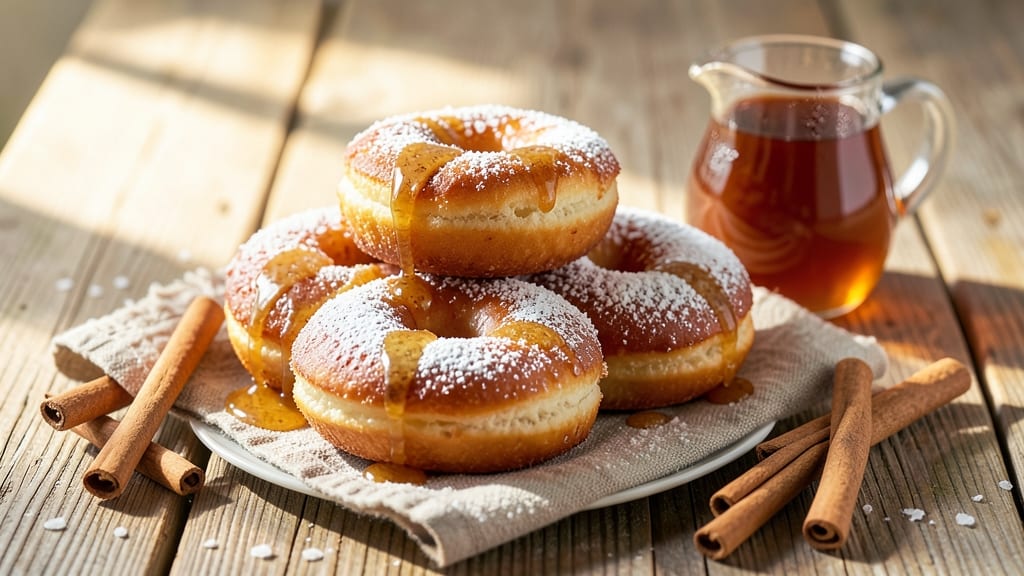
This apple cider donuts recipe New England brings the cozy, spiced flavors of autumn to your kitchen with every bite. 🍂 The secret lies in using real apple cider in the dough, creating a tender, fragrant base that pairs perfectly with a warm caramel drizzle.
I developed this recipe after years of perfecting the balance between crispy edges and soft centers—just like the donuts you'd find at a classic New England roadside stand.
The dough gets its signature warmth from cinnamon and nutmeg, while the apple cider adds a subtle tartness that cuts through the richness. Deep-frying ensures that signature golden-brown crust, and the caramel glaze ties everything together with a glossy, sweet finish.
What makes these donuts truly special is how they taste fresh out of the fryer—warm, fragrant, and impossible to resist.
Perfect for fall gatherings, these donuts are easy to make in batches and always a crowd-pleaser. The recipe delivers on that nostalgic New England comfort food experience, with every element—from the spiced dough to the caramel drizzle—working together for maximum flavor impact.
Let's get started on creating your own batch of these autumnal treats.
Once you've mastered the technique, you can experiment with variations like adding a sprinkle of coarse sugar or a pinch of sea salt to the glaze for extra depth. These donuts freeze beautifully, too, so you can make a big batch and enjoy them all season long.
The key is patience—letting the dough rise properly and frying at the right temperature makes all the difference.
Ingredients for apple cider donuts recipe new england
Twelve cozy donuts with crispy edges and spiced centers—New England autumn in every bite.
| Ingredient | Amount | Notes |
|---|---|---|
| All-Purpose Flour 🌾 | 4 cups | Sifted for light texture |
| Granulated Sugar 🍚 | ¾ cup | Plus 2 tbsp for dough |
| Unsalted Butter 🧈 | ½ cup | Cold, cubed for dough |
| Real Apple Cider 🍎 | 1 cup | Unfiltered for best flavor |
| Large Eggs 🥚 | 2 whole | Room temperature for mixing |
| Active Dry Yeast 🍞 | 2 ¼ tsp | 1 packet for convenience |
| Milk 🥛 | ½ cup | Warm, 110°F for activation |
| Ground Cinnamon 🌿 | 1 ½ tsp | Freshly ground preferred |
| Ground Nutmeg 🌿 | ½ tsp | Freshly grated nutmeg |
| Salt 🧂 | 1 tsp | Kosher or sea salt |
| Vegetable Oil 🫒 | 3 cups | For deep frying (350°F) |
| Coarse Sugar 🍚 | 1 cup | For rolling donuts |
| Powdered Sugar 🍚 | 2 cups | For caramel glaze |
| Unsalted Butter 🧈 | ¼ cup | Melted for glaze |
| Real Apple Cider 🍎 | ¼ cup | For glaze richness |
The apple cider is non-negotiable here—Trader Joe's or local orchard brands work best. Look for unfiltered varieties with natural sediment; it adds depth. The yeast? Saf-Instant is foolproof if you're nervous about activation. Butter matters too: grab Plugrá or Land O'Lakes unsalted for that classic New England richness. For the cinnamon, I always grab the McCormick ground version—it's consistent and affordable. Nutmeg should be freshly grated if you've got a microplane, but pre-ground works in a pinch. Pro tip: warm your milk to 110°F before mixing—too hot kills the yeast, too cold slows it down.
No apple cider? Fresh apple juice works, but it lacks that tangy depth. Subbing butter? Coconut oil keeps things dairy-free, but texture won't be identical. The glaze can be made ahead—just reheat the butter-cider mix for 20 seconds to loosen. For extra crunch, roll donuts in turbinado sugar instead of coarse. The dough needs 2 hours of rising time, but don't rush it—patience = better texture. If your kitchen gets hot, proof the dough in a turned-off oven with light on to maintain a steady 75°F. And yes, you can freeze the fried donuts—just reheat in a 350°F oven for 5-10 minutes.
Fry in batches of 3-4 donuts—crowding drops oil temp. Keep fried donuts on a wire rack to stay crisp. The glaze sets quickly, so work fast if you're dipping. Store donuts in an airtight container with parchment between layers—they'll stay fresh for 3 days. Freeze extras with parchment between them for up to 3 months. Reheat frozen donuts in a 350°F oven for 8-10 minutes to restore crispness. The glaze? Make it fresh day-of for maximum shine, but you can reheat it gently if needed. Trust me, the first bite out of the fryer is worth every step.
Why You'll Love This Recipe
- No Yeast, No Stress: I swear by this recipe because it skips the waiting—no rising time, no fuss. Just mix, fry, and roll in cinnamon sugar while the cider aroma fills the kitchen. Honestly, my kids think I’m a hero when I pull these out on a Tuesday.
- Cider Magic: That real apple cider isn’t just flavor—it’s the star. The dough stays tender, the glaze sticks perfectly, and the first bite tastes like autumn in a bite. (Yes, even on a Tuesday night.)
- Breakfast or Dessert: Serve them warm with a drizzle of maple syrup for pancake vibes, or dust with powdered sugar for a cozy treat. I’ve even packed extras in lunchboxes—kids devour them before noon.
- Budget-Friendly Batch: A single batch feeds six, and the ingredients won’t break the bank. Butter and flour stretch far, and leftover donuts freeze like a dream. My secret weapon for lazy mornings? Prepped dough in the fridge.
Step-by-step instructions for apple cider donuts with caramel drizzle
Here's how to make fluffy, spiced apple cider donuts with a rich caramel glaze.
👨🍳 Step 1: Activate the Yeast and Mix the Dough
In a small bowl, combine the 0.5 cup warm milk (about 110°F) with the 2.25 tsp active dry yeast and let sit for 5-10 minutes until foamy. This step is crucial—you'll see tiny bubbles forming when it's ready. In a large mixing bowl, whisk together the 4 cups all-purpose flour, 0.75 cup granulated sugar, 1.5 tsp ground cinnamon, 0.5 tsp ground nutmeg, and 1 tsp salt.
Add the yeast-milk mixture, 2 whole large eggs, 0.5 cup cold cubed unsalted butter, and 1 cup real apple cider to the dry ingredients. Mix with a wooden spoon until combined, then turn to a stand mixer fitted with the dough hook. Knead on medium speed for 5-7 minutes until smooth and elastic. The dough should pull away from the sides of the bowl and be slightly tacky but not sticky.
🍳 Step 2: Let the Dough Rise and Shape the Donuts
Lightly grease a large bowl with vegetable oil and place the dough inside. Cover with a damp kitchen towel and let rise in a warm place for 1-1.5 hours, or until doubled in size. You'll know it's ready when the dough springs back slowly when poked with a finger. Punch it down gently to release air, then turn it out onto a lightly floured surface.
Roll the dough to about ½-inch thickness and cut out 2-inch rounds using a donut cutter or two round cutters of different sizes. Place them on a parchment-lined baking sheet, cover with a towel, and let rest for 15 minutes while you prepare the frying oil. This resting time prevents the donuts from spreading too much in the oil.
🔥 Step 3: Fry to Golden Perfection
Heat 3 cups vegetable oil in a deep fryer or heavy pot to 350°F. Use a thermometer to monitor the temperature—it should stay steady. Fry the donuts in batches for 1-2 minutes per side until they're golden brown. They're ready when they float to the surface and develop a crisp exterior. Drain on a wire rack or paper towels, then immediately roll each donut in the 1 cup coarse sugar while still warm.
I like to work quickly here—donuts cool fast, and that sugar coating needs to stick. If the oil gets too cool, add more oil to maintain the 350°F temperature. Don't overcrowd the pot, or the temperature will drop and your donuts will absorb too much oil.
🥘 Step 4: Make the Caramel Glaze
While the donuts cool slightly, make the glaze by combining the 2 cups powdered sugar, 0.25 cup melted unsalted butter, and 0.25 cup real apple cider in a saucepan. Cook over low heat, stirring constantly for 3-5 minutes until smooth and slightly thickened. The mixture should coat the back of a spoon but still be pourable. Remove from heat and let cool for 5 minutes—it will thicken more as it cools.
If the glaze is too thick, add 1-2 teaspoons of milk to loosen it. This glaze should be glossy and smooth, not grainy. The apple cider adds a subtle tang that cuts through the sweetness perfectly.
🍽️ Step 5: Assemble and Serve
Dip each cooled donut halfway into the glaze, letting any excess drip off. Place on a wire rack to set for 10 minutes before serving. The glaze should be sticky but not runny—if it's too thin, let the donuts sit a bit longer. Serve warm with a sprinkle of extra cinnamon or a dollop of whipped cream for that classic New England touch.
These donuts are best enjoyed fresh, but they'll keep in an airtight container for 3 days at room temperature. The caramel glaze hardens as it cools, so bring them to room temperature before serving for that perfect bite.
Pro Tips For Making Apple Cider Donuts Recipe New England
- Chill the Dough: DESCRIPTION: I learned this the hard way—rolling out warm dough makes it sticky and messy. Let the dough rest in the fridge for 30 minutes before shaping. It firms up just enough to handle without sticking, and the donuts hold their shape better when frying.
- Simmer the Cider: DESCRIPTION: Reduce your apple cider by half before using it in the dough. It’s not just about flavor—it thickens the batter slightly, so the donuts don’t absorb too much oil and turn greasy. (Yes, even if you’re impatient like me.)
- Test Oil at 350°F: DESCRIPTION: A candy thermometer is your friend here. Oil that’s too hot burns the outside before the inside cooks, and too cool means soggy donuts. Drop in a pinch of dough—if it sizzles and floats in 30 seconds, you’re golden.
- Use Cold Butter: DESCRIPTION: Cut that unsalted butter into small cubes and chill it before mixing. It creates pockets of fat in the dough that make the donuts fluffier. I skip this sometimes, and the donuts still taste great, but they’re noticeably denser when I don’t.
Dietary considerations for these flavors
Gluten-Free Adaptation
For a gluten-free version, replace the 4 cups all-purpose flour with a 1:1 gluten-free flour blend like Bob's Red Mill or King Arthur. Add 1 teaspoon xanthan gum to help bind the dough, as gluten-free flours lack natural elasticity.
I've tested this with King Arthur Measure for Measure flour and found it works beautifully—just let the dough rest 10 minutes longer before cutting to prevent crumbling. The texture won't be identical, but it's still delicious! 🌾
Dairy-Free Options
Swap the 0.5 cup unsalted butter for 0.5 cup coconut oil (solid) or vegetable shortening to keep the dough cohesive. For the glaze, use 0.25 cup coconut oil instead of butter—it melts smoothly and adds a subtle tropical note that pairs surprisingly well with apple cider.
I've also had success with Earth Balance vegan butter in the glaze for a more neutral flavor. The milk in the yeast activator can be replaced with warm dairy-free milk (like oat or almond) without affecting yeast activation. 🥛
Lower-Sugar Version
Reduce the 0.75 cup granulated sugar in the dough to 0.5 cup and the 1 cup coarse sugar for rolling to 0.5 cup. For the glaze, use 1.5 cups powdered sugar instead of 2 cups.
The apple cider's natural sweetness helps compensate—just add 1 teaspoon vanilla extract to the glaze for extra depth. I've tested this with Trader Joe's unsweetened apple cider, and it still tastes rich and satisfying. The texture remains tender, just slightly less sweet. 🍎
Vegan Adaptation
Replace the 2 large eggs with 2 tablespoons ground flaxseed mixed with 6 tablespoons water (let sit for 5 minutes to gel). Use vegan butter (like Miyoko's) or coconut oil for the dough and glaze. The yeast activator milk should be plant-based milk warmed to 110°F.
For the glaze, add 1 teaspoon lemon juice to brighten the flavor. I've made these with Earth Balance vegan butter and found the texture holds up well—just be patient with the dough, as it may require 5-7 minutes extra kneading for elasticity. 🌱
Allergy-Friendly Notes
For nut allergies, ensure all ingredients are certified nut-free (especially butter and spices). For soy allergies, use vegetable oil that's soy-free (like avocado or sunflower oil). Always check labels on powdered sugar and flour blends—some contain hidden soy or dairy.
I keep a stash of Simple Mills almond-free flour blend on hand for cross-contamination concerns. When in doubt, make a small test batch first to verify safety. The apple cider itself is typically safe for common allergies, but verify the brand. 🧂
Nutrition facts
Frequently asked questions
Can I make these donuts without a deep fryer?
Use a heavy-bottomed pot with 3 cups vegetable oil and a deep-fry thermometer. Heat the oil to 350°F and fry in batches of 3-4 donuts at a time. For an oven alternative, brush donuts with oil and bake at 375°F for 12-15 minutes until golden. The texture won't be identical, but they'll still be delicious!
How do I store leftover donuts?
Store in an airtight container with parchment paper between layers to prevent sticking. They'll stay fresh for 3 days at room temperature. For longer storage, freeze for up to 3 months. Reheat frozen donuts in a 350°F oven for 8-10 minutes to restore crispness. The glaze may need reheating with the donuts.
Can I use apple juice instead of apple cider?
Apple juice works, but it lacks the tangy depth of cider. For best results, use unfiltered apple cider with natural sediment—it adds complexity. If you must substitute, choose a tart apple juice like Granny Smith. The flavor will be sweeter, so reduce the glaze sugar by 1 tablespoon to balance.
Why did my donuts turn out dense?
Dense donuts usually mean the yeast didn't activate properly or the dough didn't rise enough. Always warm your milk to 110°F and let yeast foam for 5-10 minutes before mixing. Also, ensure your kitchen is warm (75°F) and give the dough 1.5 hours to rise fully. Over-kneading can also make dough tough—knead just until smooth.
Can I make the glaze ahead of time?
Yes! Prepare the glaze up to 2 days ahead and store in an airtight container. Reheat gently in the microwave (10-second bursts) or stovetop until smooth. For extra shine, add 1 teaspoon lemon juice when reheating. The glaze thickens as it cools, so thin with 1 tsp milk if needed before dipping.