
Beverages
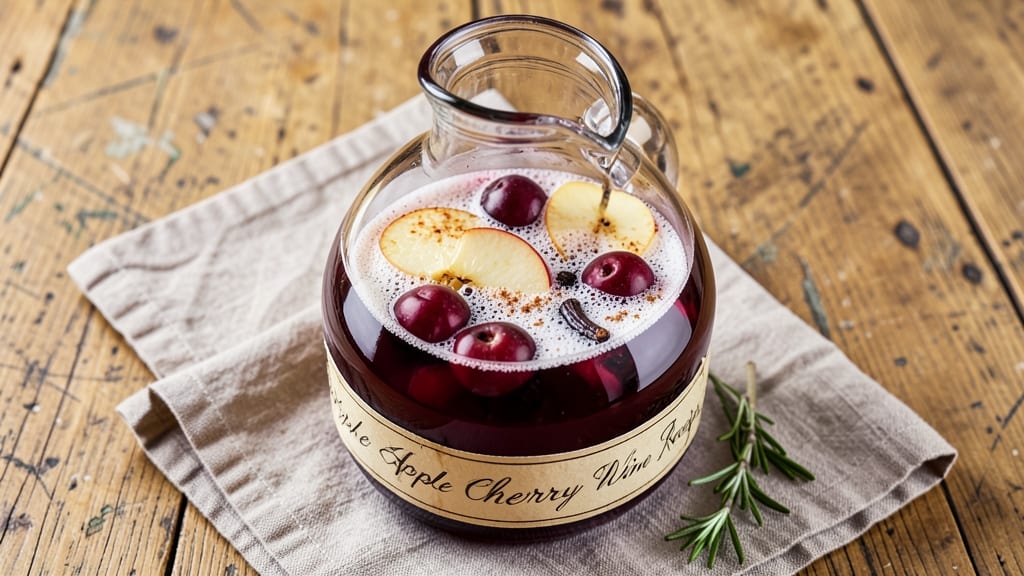
This apple cherry wine recipe transforms seasonal fruit into a rich, spiced elixir perfect for autumn gatherings. The careful balance of tart cherries and sweet apples creates depth, while warm spices like cinnamon and clove add complexity.
Fermentation transforms fresh fruit into a velvety, naturally sweetened wine that captures harvest flavors in every sip.
What sets this recipe apart is the two-stage maceration process, where fruit steeps with spices before fermentation. This method extracts maximum flavor while preserving the wine's natural brightness.
The result is a drink that's smooth enough for sipping but bold enough to pair with hearty dishes like roasted meats or sharp cheeses.
With just 10 simple ingredients and minimal equipment, this wine is surprisingly approachable for home fermenters. The process takes about 6 weeks from start to finish, allowing flavors to develop gradually. Whether you're a seasoned fermenter or trying your hand at homemade wine, this recipe delivers professional-quality results.
Serve chilled as a dessert wine or at room temperature with autumnal meals. For a non-alcoholic version, simply omit the yeast and enjoy the fruit-infused syrup as a glaze or cocktail mixer. Here's how to make it—your taste buds will thank you.
Ingredients for apple cherry wine
Ten ingredients transform autumn's finest fruits into a velvety, spiced wine with depth and complexity.
| Ingredient | Amount | Notes |
|---|---|---|
| Red Delicious Apples 🍎 | 2 lb | Peeled, cored, quartered |
| Montmorency Tart Cherries 🍒 | 1 ½ lb | Pitted, stems removed |
| Granulated Sugar 🍚 | 2 cups | Organic preferred |
| Active Dry Yeast 🍞 | ¼ oz | 1 packet (2.25g) |
| Ground Cinnamon 🌿 | 1 tbsp | High-quality spice |
| Whole Cloves 🌶️ | 6 whole | Lightly crushed |
| Orange Peel 🍊 | 1 tbsp | Dried, finely chopped |
| Distilled Water 💧 | 1 gallon | Chlorine-free preferred |
| Campden Tablets 💊 | 1 whole | Potassium metabisulfite |
| Lemon Juice 🍋 | ½ cup | Freshly squeezed |
The fruit selection is non-negotiable for this wine. Red Delicious apples provide the right balance of sweetness and acidity, while Montmorency tart cherries add vibrant tartness that cuts through the richness. Most grocery stores carry these—look for firm, unblemished fruit. Trader Joe's and Whole Foods often have organic options that enhance flavor. For the yeast, Lalvin EC-1118 is ideal if you're willing to invest, but standard active dry yeast works perfectly fine for home fermentation. The Campden tablets are crucial for sterilization—Amazon or specialty wine shops carry them reliably. When selecting spices, opt for freshly ground cinnamon and whole cloves—Penzeys Spices offers excellent quality for home fermenters.
No tart cherries? Substitute with 1 lb of black cherries or 1.5 cups frozen tart cherries, but thaw and drain them thoroughly. Running short on apples? Fuji or Gala varieties work well, though they may yield slightly less acidity. The orange peel can be omitted if unavailable, but the citrus note is essential for balance. For the Campden tablets, if you can't find them, 1/8 tsp of potassium metabisulfite works as a substitute. The sugar amount is flexible—reduce by 1/4 cup if you prefer a drier wine. Always use chlorine-free distilled water; tap water with chlorine can inhibit fermentation.
Store the fermenting wine in a cool, dark place away from direct sunlight—basements or cellars are ideal. The primary fermentation takes about 3-4 weeks, with secondary fermentation extending another 2-3 weeks. Once bottled, the wine improves with age, developing richer flavors over 3-6 months. For long-term storage, keep bottles in a consistent 55-65°F environment. The finished wine pairs beautifully with aged cheeses, roasted meats, or spiced desserts. Non-alcoholic versions can be stored in the fridge for up to 2 months after maceration.
Why You'll Love This Recipe
- No-Fuss Ferment: I swear by this recipe because it’s basically hands-off after the initial chopping. Toss in the apples, cherries, and a pinch of cinnamon—no fancy equipment, no constant stirring. The yeast does all the work while you sip something stronger than tea.
- Fruit Forward Magic: That tart-sweet balance? Chef’s kiss. The Red Delicious apples add a gentle crunch, while the Montmorency cherries bring bright acidity that cuts through the sugar. Honestly, the cinnamon makes it taste like autumn in a bottle—warm, cozy, and just a little bit fancy.
- Weekend or Weeknight: Between us, this is my go-to for potlucks and lazy Sundays. It’s ready in about a month (yes, I know, patience is key), but once it is, you’ll have a bottle that pairs with everything—cheese boards, roasted meats, or just straight from the fridge. No guilt, no stress.
- Budget-Friendly Batch: You’re using pantry staples here—apples, sugar, yeast—and a handful of cherries stretch the flavor further than you’d think. I’ve made 12 bottles for under $20, and they last forever if you store them right. That’s $1.67 per bottle of homemade happiness. Not bad.
Step-by-step instructions for crafting apple cherry wine
This method transforms fresh fruit into a complex, spiced wine with perfect balance and depth.
Prepare and Sanitize the Fruit Mixture
In a large sanitized fermentation vessel, combine the peeled, cored, and quartered 2 lb Red Delicious Apples with the pitted 1.5 lb Montmorency Tart Cherries. Crush the fruit gently with a potato masher or clean hands until you achieve a coarse, chunky consistency—this preserves texture while maximizing surface area for extraction.
Add the 1 whole Campden Tablets to the 1 gallon Distilled Water and stir until fully dissolved. This creates a sulfur dioxide solution that prevents microbial contamination. Pour this solution over the fruit mixture, ensuring all pieces are submerged. Cover the vessel with a clean cloth and let it sit at room temperature for 24 hours—this allows the fruit to macerate and release its natural juices.
Add Sweetener and Spices for Depth
After the initial maceration, stir in the 2 cups Granulated Sugar and 1 tbsp Ground Cinnamon, distributing them evenly throughout the mixture. Add the lightly crushed 6 whole Whole Cloves and 1 tbsp Orange Peel, pressing them into the fruit to release their aromatic oils. The sugar will begin dissolving immediately, creating a syrupy base that balances the fruit's acidity.
This is where the wine's character develops. The cinnamon and cloves contribute warmth, while the orange peel adds bright citrus notes that complement the tart cherries. Stir gently but thoroughly to ensure no sugar remains undissolved—undissolved sugar can lead to fermentation inconsistencies later.
Activate the Yeast and Begin Fermentation
Dissolve the 0.25 oz Active Dry Yeast in the 0.5 cup Lemon Juice using a small amount of the fruit mixture to create a slurry. The lemon juice's acidity helps activate the yeast more effectively than water alone. Pour this yeast slurry into the fermentation vessel and stir gently to distribute it evenly.
Cover the vessel with a fermentation lock or clean cloth secured with a rubber band, ensuring no air can enter while allowing carbon dioxide to escape. Place the vessel in a dark, temperature-controlled space between 65-75°F—this range is ideal for consistent fermentation without overheating the yeast. Ferment for 5-7 days, stirring daily to prevent mold formation and ensure even yeast activity.
Strain and Age for Complexity
After the initial fermentation, strain the liquid through a fine-mesh sieve or cheesecloth-lined colander into a clean, sanitized glass carboy. Press the fruit pulp firmly to extract every last drop of liquid, but avoid introducing air bubbles that could cause oxidation. The strained liquid should be a deep amber color with visible fruit particles—this indicates proper extraction.
Rack the wine into a new carboy, leaving about 1 inch of headspace to prevent overflow as carbon dioxide is released. Seal with an airlock and store in a cool, dark place for 6-8 weeks, allowing the flavors to meld and mature. During this time, the wine will develop a richer, more complex profile with reduced fruit sharpness and increased spice depth.
Bottle and Condition for Final Clarity
After aging, carefully siphon the wine into sanitized bottles, leaving ½ inch of headspace to allow for any remaining carbonation. Seal the bottles with airtight caps and store them in a cool, dark environment for 4-6 weeks to condition. This final step ensures the wine becomes crystal clear and fully balanced.
The finished wine should exhibit a vibrant amber hue with aromas of spiced apple, tart cherry, and warm cinnamon. Serve chilled at 50-55°F to highlight its bright acidity and complex spice notes. Each sip should reveal layers of fruit and warmth, with a clean, dry finish that lingers on the palate.
Pro Tips For Making Apple Cherry Wine
- USE COLD FRUIT: Start your fermentation with apples and cherries straight from the fridge—no need to warm them up. Cold fruit releases less sugar too fast, which can overwhelm the yeast and make your wine funky or overly sweet.
- PIT CHERRIES FIRST: Montmorency cherries are stubborn—don’t skip pitting them. A cherry pit left in the mix will taint the whole batch with bitterness, and you’ll spend hours wondering why your wine tastes like almond extract.
- WEIGH THE SUGAR: Sprinkle yeast on top of the sugar, then pour in the warm water—don’t stir yet. This lets the sugar dissolve slowly, giving the yeast time to activate properly. I used to dump everything in at once, and my batches would fizz like a soda can left in the sun.
- STRAIN TWICE: After primary fermentation, strain through a fine-mesh sieve, then do it again with cheesecloth. The second pass catches the tiny fruit particles that make your wine cloudy and dull. Yes, it’s extra work, but the clarity makes all the difference.
Wine and beer pairings for this apple cherry wine
Wine Pairings
This spiced apple cherry wine pairs beautifully with dry Riesling—its crisp acidity and honeyed notes mirror the wine's own fruit-forward character. I always reach for a German Kabinett Riesling from the Mosel region for its bright citrus and mineral finish that complements the tart cherries.
The slight sweetness in the wine balances the Riesling's acidity, creating a harmonious sip. 🍷
Beer Complements
For beer lovers, a Belgian-style witbier like Hoegaarden is a perfect match—the coriander and orange peel notes echo the wine's spices while the effervescence cleanses the palate. Alternatively, try a dry English bitter with malty depth, like Fuller's ESB, to contrast the wine's fruitiness.
The beer's hop bitterness cuts through the wine's sweetness, creating a refreshing balance.
Non-Alcoholic Options
If you're serving the non-alcoholic fruit syrup version, pair it with a sparkling apple cider like Martinelli's for a festive touch. The carbonation enhances the syrup's natural sweetness, while the apple notes create a cohesive flavor profile.
For a more sophisticated pairing, try a ginger beer—the spice complements the cinnamon and cloves in the syrup beautifully. 🍏
Cheese Pairings
This wine shines with aged Gouda—its caramelized sweetness and nutty undertones harmonize with the wine's spiced fruit flavors. For a sharper contrast, try blue cheese like Gorgonzola Dolce, where the wine's acidity cuts through the cheese's creaminess.
The combination creates a rich, layered tasting experience that's perfect for autumn gatherings.
Dessert Harmony
Serve the wine alongside spiced apple crumble or cherry galette to amplify the fruit flavors. The warm spices in both dishes mirror the wine's cinnamon and clove notes, creating a cohesive dessert experience.
For a lighter option, pair it with vanilla bean ice cream—the creamy texture contrasts beautifully with the wine's bright acidity and spice. 🍰
Seasonal Pairings
In colder months, this wine pairs wonderfully with roasted pork tenderloin—the wine's acidity cuts through the meat's richness, while the spices complement the savory flavors. For vegetarian options, try it with mushroom risotto—the earthy mushrooms and creamy texture create a perfect balance with the wine's fruitiness.
The versatility makes it ideal for any autumn meal. 🍂
Nutrition facts
Frequently asked questions
Can I use frozen fruit instead of fresh for this recipe?
Yes, you can use frozen fruit, but thaw it completely first and drain any excess liquid to avoid diluting the flavor. Frozen Montmorency cherries and apples work well, though fresh fruit will yield slightly more vibrant flavors. If using frozen, add an extra ½ cup sugar to compensate for the reduced natural sweetness.
How do I know when the fermentation is complete?
Fermentation is complete when the bubbling in your airlock slows to just a few bubbles per day and the wine smells clean with no sharp fruit or yeasty aromas. For this recipe, that typically happens within 5-7 days. After straining, taste a small sample—it should be slightly sweet but not overly fruity or fizzy.
Can I make this wine without alcohol?
Skip the yeast and Campden tablets, then follow the same maceration process. After 24 hours, strain the fruit-infused syrup and sweeten to taste. This syrup works as a glaze for desserts or a mixer for sparkling water. Store it in the fridge for up to 2 months—no fermentation required!
What if my wine turns cloudy after bottling?
Cloudiness usually means the wine needs more time to condition or wasn't properly filtered. Try racking it again into a clean carboy with a clarifying agent like bentonite clay (follow package instructions). If the cloudiness persists, it might be from yeast or bacteria—discard and start fresh with sanitized equipment.
How long will the finished wine keep?
Properly bottled and stored in a cool, dark place, this wine will improve for 3-6 months and stay drinkable for up to 2 years. The flavors develop complexity over time, but avoid temperature fluctuations (like basements that freeze). For longer storage, consider refrigeration after 6 months.