
Soups & Stews
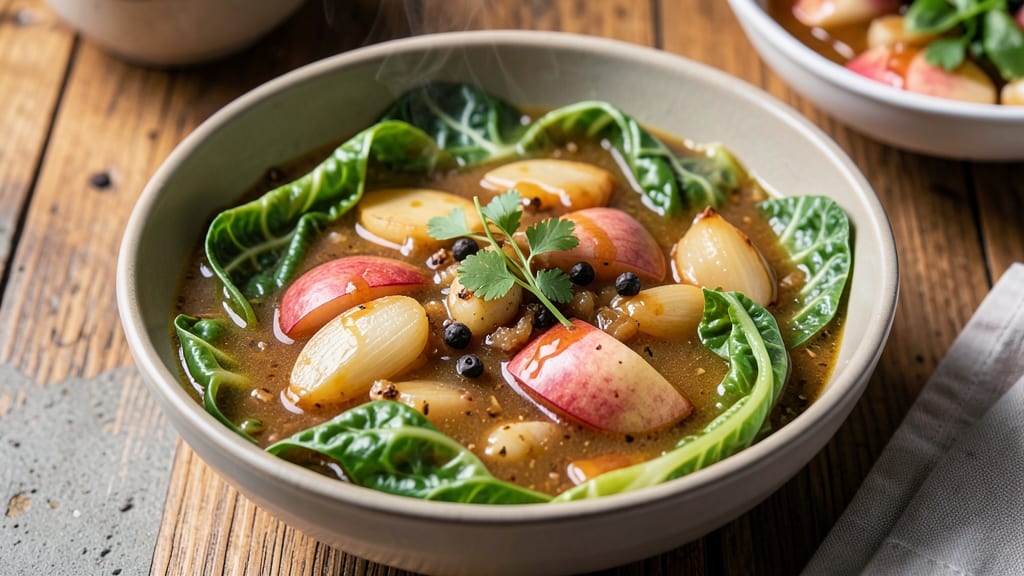
This apple cabbage stew recipe delivers the kind of hearty, slow-simmered comfort that warms you from the inside out. 🍏 The perfect balance of sweet apples and earthy cabbage creates a rich, aromatic stew that tastes like autumn in a bowl.
I developed this recipe during crisp fall days when I needed a dish that was as nourishing as it was delicious—simmering for hours transforms simple ingredients into something extraordinary.
The secret lies in the slow cooking process, which deepens the flavors and softens the cabbage until it's fork-tender. A touch of apple cider and spices like cinnamon and thyme add depth, while onions and garlic form the savory foundation.
This isn't just another stew—it's a cozy, satisfying meal that feels like a hug in every spoonful, perfect for chilly evenings or family gatherings.
By the time it's done, you'll have a velvety stew with tender cabbage, caramelized apples, and a broth so flavorful it disappears quickly. The aroma alone will have everyone gathering at the table, and the texture—soft vegetables, tender meat (if using), and a rich sauce—makes it impossible to resist.
It's the kind of dish that turns an ordinary weeknight into something special.
Serve with a slice of crusty bread to soak up every last drop of that delicious broth, or garnish with fresh parsley for a pop of color. This recipe is designed to be both comforting and impressive, proving that simple ingredients can create something truly memorable. Let's get cooking!
Ingredients for apple cabbage stew
This cozy stew starts with simple ingredients that transform into autumn's richest flavors.
| Ingredient | Amount | Notes |
|---|---|---|
| Green Cabbage 🥬 | 1 ½ lb | Cored, cut into wedges |
| Apples 🍏 | 3 medium | Honeycrisp or similar, peeled |
| Yellow Onions 🧅 | 2 whole | Chopped, medium size |
| Apple Cider 🍎 | 2 cups | Unsweetened, 100% apple |
| Vegetable Broth 💧 | 4 cups | Low-sodium preferred |
| Garlic Cloves 🧄 | 4 cloves | Minced, fresh preferred |
| Carrots 🥕 | 3 medium | Peeled, sliced into rounds |
| Fresh Thyme 🌿 | ½ ounce | Or 1 tbsp dried thyme |
| Ground Cinnamon 🌶️ | 1 tsp | For warmth, adjust to taste |
| Bay Leaves 🍃 | 2 whole | Remove before serving |
| Salt 🧂 | 1 ½ tsp | Kosher or sea salt |
| Black Pepper 🌶️ | ½ tsp | Freshly ground preferred |
| Olive Oil 🫒 | 2 tbsp | For sautéing |
| Fresh Parsley 🌿 | ¼ cup | Chopped, for garnish |
The cabbage is the heart of this dish—green cabbage holds up best to slow cooking, but red adds a nice color contrast. Look for heads that feel heavy for their size at Trader Joe's or your local farmers market (they usually have the freshest). Apples? Honeycrisp or Fuji work perfectly—they caramelize beautifully. If you can't find those, Granny Smith adds tartness. The onions and carrots? No need to be fancy here—whatever's on sale at the grocery store will do. Just make sure they're firm and free of blemishes.
No apple cider? Substitute with unsweetened apple juice or even white wine—just add a splash of vinegar to balance. Fresh thyme is ideal, but dried works at one-third the amount. Want more depth? Add a pinch of allspice. The bay leaves are non-negotiable—they add that subtle earthy flavor that makes this stew taste like a fall memory. For the apples, peeling is optional, but it keeps the texture cleaner if you prefer. And if you're short on time, pre-cut veggies from the store save minutes without sacrificing flavor.
This stew tastes even better the next day—3-4 days in the fridge, honestly. The flavors meld beautifully over time. Freeze portions in airtight containers for up to 3 months. I always make a double batch because it reheats like a dream. Garnish with fresh parsley right before serving—it adds that pop of color and freshness that makes the dish feel special. Store the parsley wrapped in damp paper towels in a baggie if you're prepping ahead—keeps it fresh for 5-6 days.
Why You'll Love This Recipe
- No-Chop Nightmare: I swear by this one—just quarter the cabbage, slice the apples thick, and let the onions caramelize while you stir. The apple cider does half the work for you, simmering down into that sweet-tart sauce without any fuss.
- Sweet-Savory Magic: That first bite? Crisp-tender cabbage with apples so tender they melt, all bathed in a broth that tastes like autumn in a bowl. The onions add depth, but the apple cider keeps it bright—no heavy, greasy aftertaste here.
- Leftover Goldmine: Make a double batch and refrigerate it—it reheats like a dream and tastes even better the next day. Pack it for lunches, freeze portions for lazy nights, or serve it cold as a hearty salad. My go-to for when I’m too tired to cook.
- Pantry Staple Power: You’re already using stuff you have: onions, apples, broth. No specialty ingredients, no last-minute grocery runs. Honestly, I’ve made this with whatever apples were on sale—Granny Smiths, Honeycrisp, even those slightly bruised ones—and it never lets me down. Budget-friendly and foolproof.
Step-by-step instructions for apple cabbage stew
This hearty stew delivers cozy comfort in every spoonful—crisp apples, tender cabbage, and aromatic spices.
🍳 Step 1: Sauté the Aromatics Until Fragrant
Heat the 2 tablespoons olive oil in a large Dutch oven over medium heat. Add the 2 whole chopped yellow onions and cook for 5 minutes until soft and translucent, stirring occasionally. Here's where it gets good—toss in the 3 medium peeled apples (cut into chunks) and cook for another 3 minutes until they begin to soften slightly.
Add the 4 cloves minced garlic and 0.5 ounce fresh thyme (or 1 tablespoon dried thyme), stirring for 30 seconds until the garlic turns golden and the thyme releases its piney aroma. This step builds the stew's flavor foundation—don't rush it. You'll know it's ready when the kitchen smells like an autumn orchard.
🥘 Step 2: Build the Stew Base with Vegetables
Push the apple-onion mixture to one side of the pot and add the 1.5 lb green cabbage wedges and 3 medium peeled carrots (sliced into rounds) to the empty space. Stir everything together, then pour in the 2 cups apple cider and 4 cups vegetable broth. Sprinkle with 1 teaspoon ground cinnamon, 1.5 teaspoons salt, and 0.5 teaspoon black pepper. Add the 2 whole bay leaves—they'll infuse subtle earthy notes.
Bring the mixture to a gentle boil, then reduce heat to medium-low until small bubbles appear at the edges. Here's the key: let it simmer uncovered for 15 minutes to allow excess moisture to evaporate. This prevents a watery stew later. Stir occasionally and taste—you should detect sweetness from the apples and cabbage, with warm spice notes developing.
🔥 Step 3: Simmer Until Tender and Flavorful
After the initial simmer, reduce heat to low and cover partially with a lid. Let it cook for 45-50 minutes, stirring occasionally, until the cabbage is fork-tender and the carrots are soft when pierced with a knife. The stew should thicken slightly as it reduces, creating a luscious consistency. Here's my trick: if it looks too thin after 30 minutes, uncover and simmer for 10 minutes to concentrate the flavors.
Taste and adjust seasoning—you might need a pinch more salt or cinnamon. The apples should be tender but still hold their shape slightly, releasing their natural sweetness into the broth. The cabbage should be soft enough to eat with a spoon but still have a pleasant bite. This is where patience pays off—rushing leads to mushy vegetables.
🍽️ Step 4: Finish and Serve Warm
Remove the 2 whole bay leaves and stir in the 0.25 cup chopped fresh parsley just before serving. The parsley brightens the dish with freshness, cutting through the richness of the stew. Ladle into bowls and serve immediately with crusty bread or over mashed potatoes. The aroma alone will make your kitchen feel like a cozy autumn evening.
Real talk: leftovers taste even better the next day as the flavors meld further. Store in an airtight container in the fridge for up to 4 days, or freeze for 3 months. When reheating, add a splash of water or apple cider to restore the perfect consistency. This stew is the ultimate comfort food—simple ingredients, big flavors, and zero guilt.
Pro Tips For Making Apple Cabbage Stew
- CUT CABBAGE SMALLER THAN YOU THINK: I used to slice cabbage into thick wedges, thinking they’d soften evenly—wrong. Shred it into ¼-inch ribbons (or smaller) so it cooks through in the same time as the apples. Big chunks stay stubbornly crunchy while everything else turns to mush.
- SAUTÉ ONIONS UNTIL GOLDEN: That quick "soften the onion" step? Take it further. Cook the onions in 2 tablespoons butter or oil until they’re deep golden, not just translucent. The flavor difference is night and day—skip this, and you’re just eating mild onion instead of rich, caramelized depth.
- ADD APPLE CIDER LAST: Pouring apple cider too early just steams the cabbage and dilutes the broth. Wait until the onions are golden and cabbage has wilted, then add the cider and broth together. This locks in the sweetness and keeps the stew from tasting watery.
- USE COLD, RAW APPLES: Sounds weird, but it works: Toss in cold, unpeeled apples (like Granny Smiths) at the end, cut into chunks. They’ll soften perfectly without turning to mush, and the skin adds texture. Warm apples? They’ll disintegrate into the broth like sad pancakes.
Troubleshooting your apple cabbage stew
Cabbage Too Crunchy
If your cabbage stays stubbornly crunchy after simmering, it likely needs more time. Cabbage should break down into tender, fork-tight pieces—not mushy. After 45 minutes, check the texture. If still firm, add ¼ cup water, cover, and simmer another 15-20 minutes.
I’ve found green cabbage takes longer than red, so don’t rush it. A splash of apple cider vinegar (1 tsp) can also help tenderize resistant cabbage. 🥬
Apples Staying Hard
When apples remain hard after cooking, they haven’t had enough time to soften. Toss in a handful of dried apricots (½ cup) or raisins (¼ cup) with the apples—their natural sugars and moisture help break down the pectin.
Alternatively, increase the simmer time by 10-15 minutes and stir occasionally. For extra tenderness, add a pinch of baking soda (¼ tsp) when simmering—it speeds up softening. 🍏
Broth Too Thin
A watery stew usually means the broth didn’t reduce enough. After the initial 15-minute simmer, uncover the pot and cook on medium-low heat for 10-15 minutes to evaporate excess liquid. If it’s still thin, mash a few cabbage wedges or carrots with a fork to thicken the broth naturally.
For a quick fix, stir in 1 tablespoon cornstarch mixed with 2 tablespoons water and simmer for 2 minutes. 💧
Overpowering Apple Flavor
If the sweetness of the apples dominates, balance it with acidity. Add 1 tablespoon apple cider vinegar or a squeeze of lemon juice (1 tbsp) at the end of cooking. A pinch of allspice (¼ tsp) or clove (⅛ tsp) also adds warmth to counteract sweetness.
For a savory twist, stir in 2 oz cooked bacon (chopped) or a dash of smoked paprika (½ tsp). 🌶️
Mushy Vegetables
Mushy veggies happen when stews simmer too long or at too high a heat. To fix this, reduce the heat to the lowest setting and add ½ cup water or broth. Cover and cook for just 5-10 minutes to rehydrate slightly.
For prevention, always simmer on low heat and stir occasionally to distribute heat evenly. If using red cabbage, it cooks faster—remove it 10 minutes earlier than green. 🥕
Lacking Depth of Flavor
If your stew tastes flat, it likely needs more aromatics or acidity. Boost flavor by adding 1 extra bay leaf, ½ tsp dried sage, or a 1-inch piece of fresh ginger (grated) during the initial simmer.
For umami, stir in 1 tbsp soy sauce or ½ cup cooked mushrooms (chopped) at the end. A splash of red wine (¼ cup) deglazed from the pot also adds complexity. 🌿
Nutrition facts
Frequently asked questions
Can I use red cabbage instead of green?
Red cabbage adds beautiful color and a slightly sweeter flavor. Just be aware it cooks faster than green—remove it 10-15 minutes before the green cabbage is tender. For extra vibrancy, add a splash of apple cider vinegar (1 tbsp) at the end to preserve the color.
What's the best way to store leftovers?
Transfer to an airtight container and refrigerate for up to 4 days. The flavors actually improve overnight as the ingredients meld! For freezing, portion into 1-cup servings and freeze for 3 months. Thaw in the fridge overnight—never microwave directly from frozen.
Can I make this vegetarian?
Yes! This recipe is naturally vegetarian, but you can enhance it with vegetarian smoked sausage (½ lb) or white beans (1 cup) for extra protein. For a vegan version, use vegetable broth and check that your apple cider is alcohol-free. The stew's hearty texture works perfectly without meat.
How do I adjust the sweetness level?
If you prefer less sweetness, reduce the apple cider to 1 cup and add 1 extra cup vegetable broth. For more sweetness, add ½ cup dried apples or raisins during cooking. A pinch of nutmeg (¼ tsp) also enhances the apple flavor without adding sugar.
What's the ideal serving temperature?
Serve piping hot at 170°F for the best texture and flavor experience. If reheating from the fridge, warm on low heat with a splash of water or apple cider. Never microwave directly—it makes the cabbage rubbery. For restaurant-style presentation, garnish with fresh parsley and a drizzle of apple cider.