
Desserts
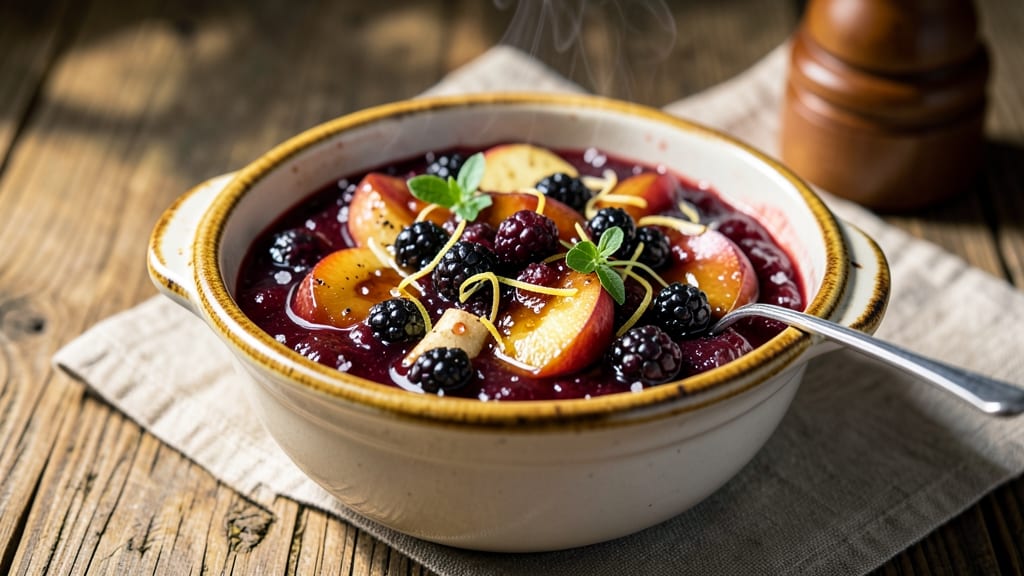
This apple and bramble jam recipe transforms summer’s brightest flavors into a luscious preserve that bridges sweet and tart perfection. The balance of crisp apples and wild bramble berries creates a jam that’s vibrant, aromatic, and versatile enough to elevate everything from toast to cocktails.
I developed this recipe after years of experimenting with fruit combinations—this one delivers a harmony that’s both nostalgic and unexpectedly modern.
The secret lies in precise ratios: equal parts apples and brambles, a touch of lemon juice for brightness, and just enough sugar to highlight the fruits’ natural depth.
Cooking it low and slow ensures a thick, glossy texture without losing the berries’ signature tang. This isn’t just jam—it’s a condiment that turns ordinary dishes into something extraordinary.
Imagine spreading this jam on warm sourdough, pairing it with sharp cheddar, or drizzling it over vanilla ice cream for a sophisticated twist. The brambles add a subtle earthiness that cuts through richness, while the apples bring a gentle sweetness that lingers.
It’s the kind of preserve that makes you rethink how you use fruit in cooking and cocktails alike.
Best of all, this recipe scales effortlessly—make a big batch for gifting or keep a jar in your fridge for spontaneous flavor upgrades. The process is straightforward, but the results are anything but ordinary. Let’s get started on creating something truly special.
Ingredients for apple and bramble jam
Equal parts fruit and sugar, plus a touch of tartness. This jam transforms summer’s bounty into something extraordinary.
| Ingredient | Amount | Notes |
|---|---|---|
| Mature Apples (Granny Smith or Honeycrisp) 🍎 | 2 lb | Peeled, cored, chopped into 1/2-inch pieces |
| Fresh Bramble Berries 🫐 | 2 lb | Or blackberries if brambles unavailable |
| Granulated Sugar 🍚 | 2 cups | Light brown sugar for deeper flavor |
| Fresh Lemon Juice 🍋 | ¼ cup | From 2-3 lemons, freshly squeezed |
| Fresh Ginger Root 🌿 | 1 tbsp | Finely grated, aromatic variety preferred |
| Apple Cider Vinegar 🍶 | 1 tbsp | For brightness and preservation |
| Low-Sugar Pectin 🍯 | 2 tbsp | Powdered or liquid, for gelling |
| Vanilla Bean Seeds 🌸 | 1 tsp | Optional, for subtle depth |
| Sea Salt 🧂 | ½ tsp | Fine grain, enhances all flavors |
The apples and brambles are non-negotiable—their balance creates that signature harmony. Granny Smiths add tartness while Honeycrisp brings sweetness, but any crisp apple works. Brambles can be tricky to find, so blackberries are a solid backup—just reduce cooking time slightly. For the best berries, check local farmers markets in late summer when they're at peak flavor. The sugar should be light brown—it caramelizes beautifully and adds depth without overpowering the fruit's natural tang. If you're feeling fancy, grab a vanilla bean from a specialty store like Williams Sonoma—it elevates everything.
No brambles? Blackberries or raspberries work in a pinch, but they'll yield a slightly different texture. Running short on apples? Substitute with more berries and reduce sugar by 1/4 cup. The lemon juice is crucial—freshly squeezed is a must, but if you're in a bind, bottled works. The ginger adds warmth that lingers, so if you're sensitive to spice, cut it to 1/2 tbsp. For the pectin, Ball or Sure-Jell are reliable, but if you're making a small batch, you can skip it entirely—just expect a softer set. The apple cider vinegar might seem odd, but it preserves the jam's vibrant color and balances the sweetness beautifully.
This jam tastes even better the next day once the flavors meld. Store it in sterilized glass jars with tight lids—keeps for up to 1 year in the pantry. For gifting, I always use mason jars with ribbon ties—they look stunning on any kitchen counter. If you make a big batch, freeze half for later. The texture changes slightly after freezing, but it reheats beautifully. Pro tip: Label your jars with the date—trust me, you'll forget how long it's been sitting there.
Why You'll Love This Recipe
- No Chopping Needed: Honestly, I just core the apples and rough-chop them—no peeling, no dicing. The brambles go in whole, stems and all, and the ginger gets a quick grating. That’s it. Ten minutes of prep, and the rest is hands-off simmering while you sip tea.
- Taste Like Summer Captured: The Granny Smith’s sharp bite cuts through the brambles’ jammy sweetness, while the ginger adds this unexpected kick—like a hug for your taste buds. A splash of lemon juice ties it all together, bright and balanced. It’s the kind of jam that makes you pause mid-spoonful.
- Works Everywhere: Slather it on toast with butter, stir it into yogurt for a breakfast upgrade, or drizzle it over warm oatmeal. I’ve even used it as a glaze for roasted pork—trust me, it’s magic. The versatility means I never run out of reasons to make a batch.
- Lasts Months, Costs Pennies: A big pot yields jars that’ll sit in my pantry until I forget I have them. Sugar’s cheap, apples stay fresh for weeks, and brambles freeze well if you can’t use them all at once. For the effort, you get flavor that stretches across seasons without breaking the bank.
Step-by-step instructions for apple and bramble jam
Here's how to craft jam that balances sweet apples with tart brambles—rich, fragrant, and perfect for toast.
Combine Apples, Berries, and Sweetener
In a large, heavy-bottomed pot, combine the 2 lb chopped mature apples and 2 lb fresh bramble berries. Stir in the 2 cups granulated sugar and 0.5 tsp sea salt, mixing until the sugar dissolves completely. This ensures even distribution and prevents grainy texture later.
Place the pot over medium-high heat and bring the mixture to a boil, stirring occasionally to prevent scorching. Once boiling, reduce heat to medium and let it simmer vigorously for 10 minutes. You'll see the mixture thicken slightly and release juices—this is when the natural pectin in the fruit begins to activate.
Here's the thing—don't rush this step. The sugar needs time to fully integrate with the fruit's moisture. If you see any sugar crystals lingering at the bottom, stir them in now. This creates a smoother, more cohesive jam.
Add Aromatics and Acid
After 10 minutes, stir in the 0.25 cup fresh lemon juice, 1 tbsp finely grated fresh ginger root, and 1 tbsp apple cider vinegar. The lemon juice brightens the flavors, the ginger adds warmth, and the vinegar helps preserve the jam while cutting through the sweetness.
Let the mixture simmer for another 15 minutes, stirring every 3-4 minutes to prevent sticking. You're looking for a syrupy consistency here—thicker than juice but still pourable. If the jam starts to darken too quickly, reduce the heat slightly to medium-low to avoid burning.
This is where the magic happens. The ginger will infuse its aromatic oils, and the lemon juice will mellow out the tartness of the brambles. Taste a spoonful now—you should detect a balance of sweet, tart, and spicy notes.
Incorporate Pectin and Vanilla
With the mixture still simmering, sprinkle in the 2 tbsp low-sugar pectin and stir vigorously for 1-2 minutes to fully dissolve. Pectin is your secret weapon here—it helps create that perfect gel-like texture without needing extra sugar. The vanilla bean seeds go in next, adding a subtle depth that ties everything together.
Continue simmering for an additional 10-15 minutes, stirring frequently. You'll know it's ready when the jam reaches a 220°F internal temperature on a candy thermometer. At this point, it should coat the back of a metal spoon in a thick, glossy layer that doesn't slide off immediately—that's your signal to stop.
Real talk: If you don't have a candy thermometer, do the plate test. Drop a small spoonful of jam onto a chilled plate. If it wrinkles when you push it with your finger, it's ready. If it runs, keep cooking.
Test for Doneness and Preserve
Once the jam reaches the right consistency, remove it from heat and skim off any foam that has risen to the top with a spoon. Transfer the jam to a clean, sterilized 4-cup jar or airtight container, leaving about ½-inch headspace at the top to allow for expansion as it cools.
Seal the jar tightly and let the jam cool to room temperature. This step is crucial—cooling allows the pectin to fully set and creates that beautiful, spreadable texture. Once cooled, refrigerate for up to 3 months or process in a water bath for long-term storage.
Here's the final check: When you spread this jam on toast, it should hold its shape slightly but still be smooth and glossy. The brambles should be visible as little bursts of tartness, and the apple flavor should shine through with a hint of spicy ginger. That's how you know you've nailed it.
Pro Tips For Making Apple And Bramble Jam
- COOK LOW AND SLOW: Bramble berries turn to mush fast—keep heat at a gentle simmer, not a boil. I learned this after watching my first batch turn into a sad, watery sludge. A steady 180°F (82°C) is ideal; if bubbles pop like popcorn, lower the heat.
- GRATE THE GINGER FINE: Skip the mincer—grate the ginger with a microplane for even distribution. Too much chunky ginger means you’ll taste it in every bite, and not in a good way. A teaspoon of fresh zest is enough; no need to go overboard.
- STRAIN THE BRAMBLES: Use a fine-mesh sieve to remove seeds and tough stems—trust me, you don’t want a mouthful of bramble grit. I used to skip this, and my jam always felt gritty, no matter how much I stirred.
- PEEL AND CORE APPLES FIRST: Save time by peeling and coring apples before chopping—no last-minute scrambling. I used to chop whole, and the skins turned bitter, while the cores left weird texture pockets. A mandoline speeds this up if you’re impatient.
Troubleshooting perfect results
Jam Too Runny?
If your jam isn't setting properly, you likely need more pectin or longer cooking time. For a quick fix, sprinkle ½ tsp additional pectin into the simmering jam and stir vigorously for 1-2 minutes before continuing to cook.
Alternatively, increase simmering time by 5-10 minutes while monitoring temperature—aim for 220°F on a candy thermometer. If you're still struggling, try adding 1 tbsp cornstarch mixed with 1 tbsp cold water to thicken it up. 💡
Grainy Texture?
A grainy jam usually means sugar didn't fully dissolve or the fruit wasn't cooked enough. First, make sure all sugar crystals are dissolved by stirring vigorously during the initial boil. If you're still seeing grit, simmer the jam uncovered for an additional 5 minutes to evaporate excess moisture.
For future batches, use slightly more sugar (¼ cup extra) or cook the fruit mixture for 5 minutes longer before adding pectin. I've found light brown sugar helps prevent graininess better than white sugar.
Berries Too Tart?
The brambles' natural acidity can overpower the sweetness if not balanced properly. To fix this, add 1-2 tbsp more sugar while the jam is still hot and stir until dissolved.
If you prefer a more balanced flavor, reduce the berry quantity by ½ lb in future batches and increase apples by the same amount. A splash of apple cider vinegar (another ½ tbsp) also helps mellow the tartness while adding complexity. 🍋
Jam Too Dark?
Overcooking causes jam to darken and develop a bitter flavor. To prevent this, keep the heat at medium-low once the mixture reaches a boil.
If your jam is already too dark, try balancing the flavor by adding 1 tsp fresh lemon juice or ½ tsp vanilla extract after removing it from heat. For future batches, reduce cooking time by 5 minutes and monitor closely. Using Granny Smith apples (tart variety) also helps maintain brightness.
Foam on Top?
Foam is normal but can be unsightly. To minimize it, avoid stirring too vigorously during cooking. If you see foam forming, simply skim it off with a spoon before transferring the jam to jars.
For a smoother finish, add ½ tsp lemon juice to the hot jam—it helps break down proteins that cause foam. I also recommend using a wide-mouth jar to make skimming easier. The foam won't affect taste or texture, but it's nice to have a clean top layer.
Jam Not Setting?
If your jam remains liquidy even after reaching 220°F, it likely needs more pectin or acid. For an immediate fix, mix 1 tsp powdered pectin with 1 tbsp cold water, stir into the jam, and cook for another 3-5 minutes.
Alternatively, add 1 tbsp apple cider vinegar or lemon juice to boost acidity, which helps the pectin work better. For future batches, ensure you're using low-sugar pectin (like Ball or Sure-Jell) and follow package instructions precisely. 🍯
Nutrition facts
Frequently asked questions about apple and bramble jam
Why does this recipe use both apples and brambles?
The combination creates a perfect balance of flavors—apples provide gentle sweetness while brambles add vibrant tartness. This contrast makes the jam more complex and interesting than single-fruit preserves. The apples also help thicken the jam naturally, reducing the need for extra pectin.
Can I substitute blackberries for brambles?
Yes! Blackberries work beautifully as a substitute, though they'll yield a slightly different texture. Use the same 2 lb measurement and reduce cooking time by 5 minutes since they're softer than brambles. The flavor will be slightly less complex but still delicious. For best results, choose ripe, plump berries.
How do I know when the jam is done?
Use a candy thermometer for precision—jam is ready at 220°F. If you don't have one, do the plate test: drop a spoonful on a chilled plate. When it wrinkles when pushed with your finger, it's done. The jam should also coat the back of a metal spoon in a thick, glossy layer that doesn't slide off immediately.
How long will this jam keep?
Store the jam in sterilized glass jars in the refrigerator for up to 3 months. For longer storage, process the jars in a water bath for 10 minutes (sealed jars last 1 year in a cool, dark pantry). The flavor actually improves after the first 24 hours as the ingredients meld together.
What are the best ways to use this jam?
This versatile jam works beautifully on toasted sourdough, cheese boards (especially with sharp cheddar), or vanilla ice cream. Try it in cocktails like a gin fizz or drizzled over pancakes. The bramble's tartness also makes it perfect for balancing rich desserts like tiramisu or crème brûlée.