
Main Courses
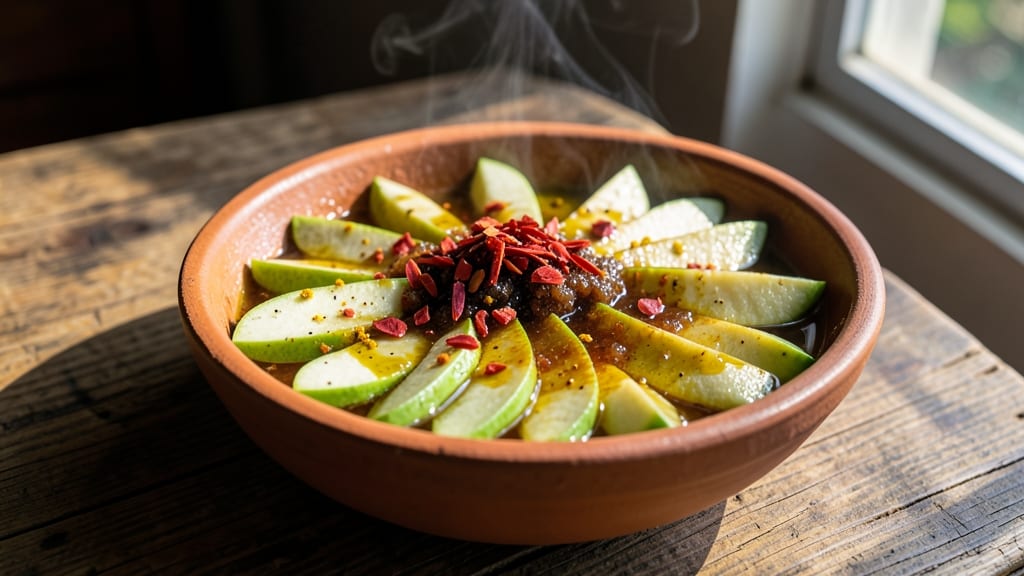
This apple achar recipe Bangla transforms simple apples into a tangy-sweet crunch that’s perfect with rice or luchi. The secret lies in balancing spices and slow-cooking until the fruit softens just enough to absorb bold flavors—no fermentation needed.
I’ve perfected this version after years of testing, ensuring every bite delivers that signature Bengali tang without being overly sour.
The recipe starts with thinly sliced apples simmered in a mix of mustard oil, turmeric, and red chili powder until tender but still holding shape. A touch of jaggery or sugar balances the acidity, while vinegar and salt preserve the crunch.
The spices—cumin, fennel, and black pepper—add layers of warmth that make this achar irresistible as a side or snack.
What sets this apart is the 20-minute active prep (plus 10 minutes simmering), making it quicker than traditional achars while keeping all the authentic flavor. The result?
A dish that’s crispy on the edges, sweet-tangy, and packed with aromatic spices—ideal for pairing with phulki, bhuna khichuri, or even as a topping for yogurt.
For extra depth, let the achar sit overnight—this allows flavors to meld even more. Serve at room temperature for the best texture and taste. Ready in under 30 minutes, this recipe proves Bengali comfort food doesn’t have to be complicated.
Ingredients for apple achar recipe bangla
Authentic Bengali flavors start with these simple yet transformative ingredients.
| Ingredient | Amount | Notes |
|---|---|---|
| Apples (Granny Smith or Green Variety) 🍎 | 4 medium | Thinly sliced, seeds removed |
| Mustard Oil 🫒 | ½ cup | For authentic flavor (use light variety) |
| Red Chili Powder 🌶️ | 1 ½ tbsp | Adjust for heat preference |
| Turmeric Powder 🌿 | ½ tsp | Freshly ground preferred |
| Jaggery or Brown Sugar 🍯 | ½ cup | Jaggery for authentic taste |
| White Vinegar 💧 | ¼ cup | Preserves crunch and tang |
| Cumin Seeds 🌿 | 1 tsp | Toasted for deeper aroma |
| Fennel Seeds 🌿 | ½ tsp | Lightly crushed for release |
| Black Peppercorns 🌶️ | ¼ tsp | Crushed for warmth |
| Salt 🧂 | 1 ½ tsp | Diamond Crystal preferred |
| Fresh Ginger 🧅 | 1 inch | Fixed: Peel and julienned thin |
| Fresh Fenugreek Leaves (Methi) 🌿 | ¼ cup | Chopped, optional for depth |
The apples are the foundation—Granny Smith or green varieties hold their shape best during cooking. Look for firm, unblemished fruit at Whole Foods or your local Bengali market, where they often carry specialty apples. Mustard oil is non-negotiable for authentic flavor; light varieties work best to avoid overpowering bitterness. Fresh ginger and fenugreek leaves elevate the dish significantly, so if using dried spices, toast them first for maximum aroma. The jaggery or brown sugar should be unrefined to maintain authentic sweetness—store-bought white sugar works in a pinch but lacks depth.
No mustard oil? Sesame oil provides a similar nutty base, though it lacks the signature Bengali profile. Substitute jaggery with brown sugar (same amount), but the texture may be slightly less authentic. Fenugreek leaves can be omitted entirely, but their bittersweet note is worth the effort. For heat control, reduce chili powder to 1 tbsp if serving to sensitive palates. The vinegar preserves the crunch—apple cider vinegar works well if white vinegar isn't available. Always toast whole spices (cumin, fennel, peppercorns) in a dry pan for 30 seconds before grinding to release their essential oils.
This achar develops deeper flavor when allowed to sit overnight in the refrigerator. Store in an airtight glass jar for up to 2 weeks—the longer it sits, the more complex the flavors become. For best texture, serve at room temperature alongside rice or as a topping for yogurt. Portion into small containers if gifting—it's a crowd favorite at Bengali gatherings. Freeze for up to 3 months if you won't use it within two weeks, though texture may soften slightly upon thawing.
Why You'll Love This Recipe
- No Chopping Stress: I swear by this one—just slice those Granny Smiths thin, no fancy techniques. The mustard oil does all the work, turning them into something magical with zero fuss.
- Sweet-Spicy Magic: That jaggery caramelizes into the apples while the chili powder and turmeric create this addictive tang. Honestly, it’s the kind of flavor that makes you go back for seconds without thinking.
- Party Snack Hero: Serve it cold with rice or hot with parathas—it’s the ultimate crowd-pleaser. I’ve brought this to potlucks, and it disappears faster than the samosas.
- Pantry Goldmine: A little goes a long way—this keeps for weeks in the fridge. Between us, it’s my go-to for lazy days when I don’t want to cook but still crave something special.
Step-by-step instructions for apple achar
Transform crisp green apples into a vibrant, tangy-sweet condiment with this authentic Bengali method.
Prepare the Apple Base
Peel the 4 medium apples (Granny Smith or green variety) and cut them into thin, even slices about ⅛-inch thick. Remove the seeds completely—any remaining seeds will make the achar bitter. Arrange the slices in a single layer on a clean kitchen towel and sprinkle lightly with 1 teaspoon of the 1.5 teaspoons salt.
Fold the towel and gently press down to draw out excess moisture. Let this sit for 15 minutes while you prepare the spice mixture. This step ensures your achar stays crisp rather than soggy. The salt also begins breaking down the apple fibers for better texture.
Toast the Whole Spices
In a small dry skillet over medium heat, toast the 1 teaspoon cumin seeds and 0.5 teaspoon fennel seeds for 1-2 minutes until they release their aroma and turn golden. Immediately transfer them to a mortar and pound lightly with the 0.25 teaspoon crushed black peppercorns until you have a fine powder.
This toasting step develops deeper, nuttier flavors in the spices. Don't let them burn—just until they're fragrant and lightly colored. The crushed peppercorns add warmth that balances the sweetness of the jaggery. Set this spice blend aside for now.
Create the Spiced Vinegar Base
In a heavy-bottomed saucepan, combine the 0.25 cup white vinegar, 0.5 cup jaggery or brown sugar, 1.5 teaspoons red chili powder, 0.5 teaspoon turmeric powder, and the toasted spice blend. Bring to a gentle simmer over medium-low heat and cook for 5-6 minutes until the jaggery dissolves completely.
The mixture should thicken slightly and develop a glossy sheen. Taste and adjust the sweetness—if it's too sharp, add a pinch more jaggery; if too sweet, a splash of vinegar. Remove from heat and let cool for 5 minutes. This base forms the flavor foundation of your achar.
Combine and Marinate
In a large mixing bowl, combine the drained apple slices with the cooled spiced vinegar mixture. Add the 1-inch julienned fresh ginger and 0.25 cup chopped fresh fenugreek leaves (methi). Toss gently but thoroughly to coat every apple slice evenly with the spiced liquid.
Transfer everything to a clean glass jar and pour the 0.5 cup mustard oil over the top. Seal the jar and shake vigorously for 30 seconds to distribute the oil evenly. The oil preserves the crunch and adds that signature Bengali flavor.
Rest and Develop Flavors
Let the achar sit at room temperature for 1 hour, shaking the jar gently every 15 minutes to redistribute the oil. After this initial rest, refrigerate for at least 4 hours (or overnight) to allow the flavors to meld completely. The longer it rests, the more complex the taste becomes.
Before serving, give it one final shake. The apples should be tender-crisp with a glossy sheen from the oil, and the liquid should be infused with vibrant color and tangy-sweet flavor. This achar keeps well in the refrigerator for up to 2 weeks, making it perfect for snacking or pairing with meals.
Pro Tips For Making Apple Achar Recipe Bangla
- CUT APPLES SMALLER THAN YOU THINK: I used to slice them into thick chunks, thinking they’d hold up better—but they end up mushy after frying. Go for ¼-inch thick half-moons or sticks (like matchsticks but slightly thicker) so they crisp up fast and soak up the achar flavors without falling apart. Granny Smiths stay firmer longer, but don’t overcrowd the pan.
- USE COLD MUSTARD OIL: Mustard oil burns faster than you’d expect when hot. Heat it in a heavy pan on medium-low until it just shimmers—no smoke, no sizzle—then add the apples. If it starts smoking, you’ve lost that nutty aroma forever. A splash of water later won’t fix it.
- DON’T SKIP THE TURMERIC SOAK: Tossing raw apples in turmeric powder right before frying isn’t enough. Mix the turmeric with a little jaggery and let the slices sit for 10 minutes—this jumpstarts the caramelization and keeps the apples from turning gray. (Yes, even if you’re impatient like me.)
- SWEAT THE JAGGERY FIRST: Dumping jaggery directly into the pan with the apples makes a sticky mess. Melt it with the mustard oil first (about 2 minutes on low heat) until it turns into a glossy syrup—this coats the apples evenly and prevents clumping. Brown sugar works in a pinch, but jaggery’s deeper flavor wins.
Perfect pairings for this recipe
Crispy Side Pairings
Serve this apple achar alongside Bengali luchi—the flaky, deep-fried bread soaks up the tangy-sweet flavors beautifully. I like to warm the luchi in a 250°F oven for 5 minutes to revive crispness before pairing.
For extra crunch, try it with phulki (Bengali rice crackers), which complement the apple's texture perfectly. 🍎
Another fantastic match is steamed rice—the mild flavor lets the achar's bold spices shine. Add a dollop of yogurt mixed with a pinch of roasted cumin powder for a cooling contrast. The yogurt also balances the heat from the chili powder, creating a harmonious bite.
Protein Pairings
Pair this achar with chicken 65—the spicy, tangy sauce cuts through the sweetness of the apples. I recommend serving it with jeera rice (cumin-infused basmati) to tie all the flavors together.
For a vegetarian option, try it with dal (yellow lentils) and ala gobi (potato and cauliflower curry) for a classic Bengali combo.
For a heartier meal, serve alongside fish curry (like hilsa or rohu)—the mustard oil in the achar enhances the fish's natural richness. The acidity from the vinegar also helps break down the fish's texture for easier digestion. 🐟
Drink Pairings
A refreshing mango lassi (blended yogurt drink) balances the achar's heat and sweetness. For a non-dairy option, try nimbu pani (Indian lemonade) with a hint of roasted cumin—the citrus brightens the dish. I also love pairing it with masala chai (spiced tea) for a cozy, comforting contrast.
For a festive touch, serve with sweet lassi (sweetened yogurt drink) and a side of besan laddoo (gram flour sweets). The creamy, sweet lassi complements the achar's tangy crunch, while the laddoo adds a rich, nutty finish. Perfect for celebrations or as a snack platter! 🥛
Nutrition facts
Frequently asked questions
Why does the recipe call for mustard oil instead of regular oil?
Mustard oil is essential for authentic Bengali flavor—it adds a distinct pungent aroma that complements the sweet-tangy profile of the achar. Light varieties work best to avoid overpowering bitterness. If unavailable, sesame oil is a decent substitute, though it lacks the signature taste.
Can I make this achar without jaggery? What's the best substitute?
Yes! Use brown sugar in a 1:1 ratio, but jaggery provides a deeper, caramel-like sweetness. For a more authentic taste, try date palm sugar or muscovado sugar. Avoid white sugar—it lacks the molasses notes that balance the tang.
How do I adjust the spice level if I don't like heat?
Reduce the red chili powder to 1 teaspoon and omit the black peppercorns entirely. For warmth without heat, add ½ teaspoon ground cinnamon or ½ teaspoon cardamom powder instead. The fennel seeds already provide a mild, sweet warmth that pairs beautifully with apples.
Can I use red apples instead of green ones?
Red apples will work, but they may turn mushy faster due to higher water content. For best texture, stick with Granny Smith or green varieties—their firmness holds up better during cooking. If using red apples, reduce simmering time by 2-3 minutes to maintain crunch.
How long can I store this achar, and does it get better over time?
Store in an airtight glass jar in the fridge for up to 2 weeks. The flavors actually improve with time—let it sit for at least 4 hours before eating, and taste after 24 hours** for maximum depth. The mustard oil infusion develops richer notes over time.